
CIOSP 2026: Meet RayForm at Booth S23-4
A practical guide for dental labs, clear aligner manufacturers, and DSOs attending CIOSP in São Paulo.Why Most CIOSP Visits Fail
CIOSP 2026 is one of the biggest moments of the year for dental buyers in Latin America. But most visits still feel rushed. You walk the halls, collect brochures, and leave without the parameter ranges, workflow proof, or cost model you actually need.
This guide is written for dental labs, clear aligner manufacturers, DSOs, distributors, and OEM/ODM teams who want a practical plan. We will show you how to prepare, what to ask on-site, and what evidence to request—so you can make a decision with fewer surprises.
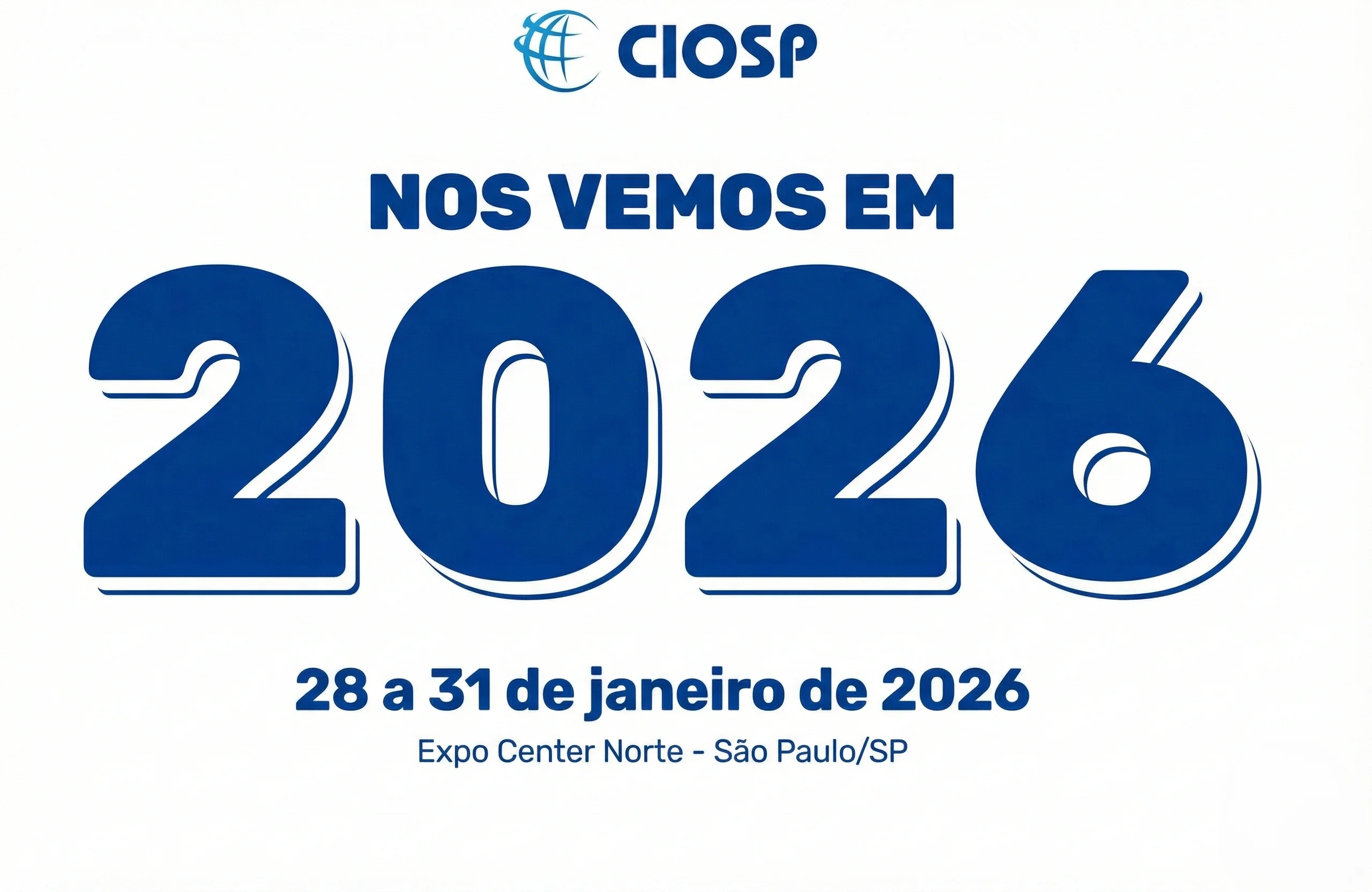
You can confirm the official event details on the organizer site.[1]
The Real Pain Behind “Too Many Options”
Dental manufacturing is not just about “finding a resin” or “buying a printer.” Most problems happen in the middle: the process window is too narrow, the post-processing steps are inconsistent, or the yield drops when you scale.
Here are the most common reasons buyers waste time at trade shows:
The fix is simple: go to the show with a “proof checklist.” Your goal is to leave with documents and test plans you can repeat at home.
A Practical On-Site Framework
Below is the framework I recommend using on the show floor. It is designed to convert “nice claims” into “repeatable results.”
Step 1: Bring Your Use Case
Before you arrive, prepare these five items:
- Top applications: (e.g., ortho models, surgical guides, temp restorations).
- Current setup: Printer type (LCD/DLP) and layer thickness.
- Failure pattern: Warpage, breakage, or fit issues.
- Scale target: Specific yield or volume goals.
- Validation method: Request a parameter pack you can reproduce.
Step 2: Ask “Material + Process + Post-processing”
Don’t just ask “What resin do you have?” Instead, tie the material to the process:
- Process window: What exposure range is stable at my layer thickness?
- Consistency: How does performance vary across batches?
- Post-processing SOP: What is the critical control point for wash and cure?
- Cost model: What is the real cost including rework and labor?
Step 3: The “Proof Deliverable” Checklist
Use this table to judge whether a booth is worth a deeper discussion:
| Your Goal | What to Ask | What to Take Home |
|---|---|---|
| Higher yield | “What is the stable parameter window?” | Parameter sheet + control points |
| Faster throughput | “Where is the bottleneck: print or post?” | Throughput estimate model |
| Better surface | “What support strategy do you recommend?” | Sample + support guidance |
| Easier training | “How steep is the learning curve?” | SOP draft + training outline |
| Compliance | “What documentation is available?” | Document list + traceability info |
What to Discuss with RayForm at Booth S23-4
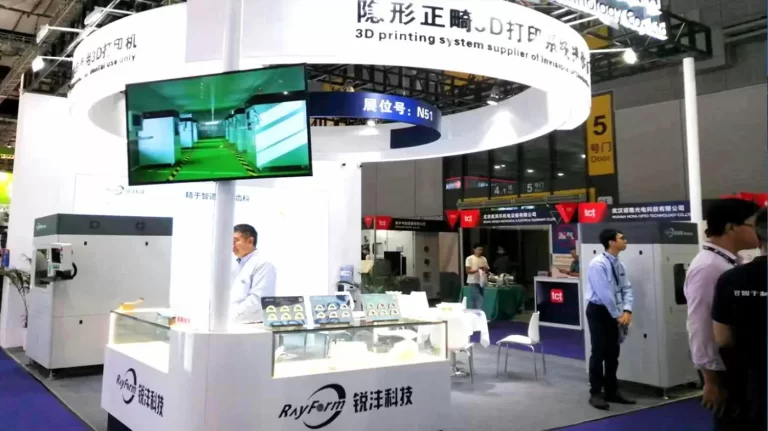
RayForm Technology focuses on dental 3D printing materials and end-to-end digital production workflows. We typically support customers with parameter guidance, standardized post-processing, and compatibility planning.
At CIOSP 2026, here are three high-value directions to cover with us:
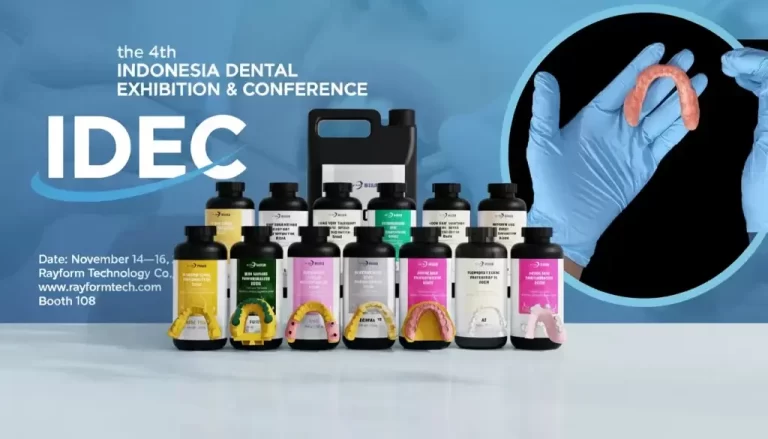
🧪 1. Resins: Stability First
If you are evaluating resins, the key is not the name, but the workflow forgiveness.
- Dimensional stability: Controls distortion.
- Reproducible windows: Stable settings for your lab.
- Quality checkpoints: How to catch drift early.
🖨️ 2. Printers & Productivity
Resolution matters, but ROI lives in productivity.
- Output per shift: Realistic delivery numbers.
- Failure recovery: How fast you return to production.
- Operator workload: Time spent cleaning/curing.
🦷 3. Aligner Model Production
For aligner manufacturers, the model starts the chain.
- Thermoforming success: Surface quality & demolding.
- Heat resistance: Stability during vacuum forming.
- Standardization: Workflows for multiple sites.
Quality Systems & Documentation
For dental production teams, risk is usually process drift over time. That is why we emphasize quality management frameworks (aligned with principles like ISO 9001 and ISO 13485[4]).
A simple document list you can request at our booth:
- ✅ Parameter guidance: By printer type & layer thickness.
- ✅ Post-processing SOP: Wash, cure, support removal.
- ✅ QC checklist: What to measure and log.
- ✅ Traceability approach: Batch labeling methods.
Frequently Asked Questions
When and where is CIOSP 2026?
CIOSP 2026 runs from Jan 28–31, 2026 at Expo Center Norte in São Paulo.[3]
What should distributors focus on?
Focus on fast-moving SKUs, documentation, training support, lead time stability, and technical escalation processes.
Can I book a time to talk at Booth S23-4?
Yes. The fastest way is to message us directly on WhatsApp so we can align on your use case and prepare the right documents.[2]
Contact us to request a parameter pack or documentation summary.
References & Sources
- [1] CIOSP Official Website. “Event Details & Venue”. https://www.ciosp.com.br/
- [2] WhatsApp Contact. “RayForm Technology Booking”. https://wa.me/8615820462870
- [3] Expo Center Norte. “CIOSP Event Page”. expocenternorte.com.br
- [4] ISO Standards. “ISO 9001:2015 & ISO 13485:2016 Overviews”. iso.org