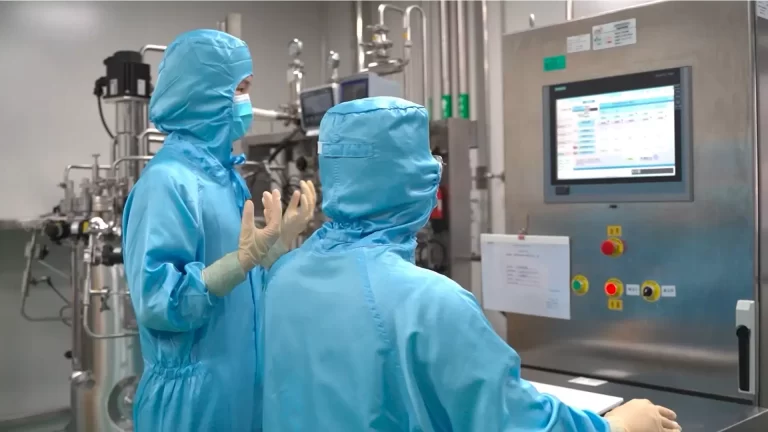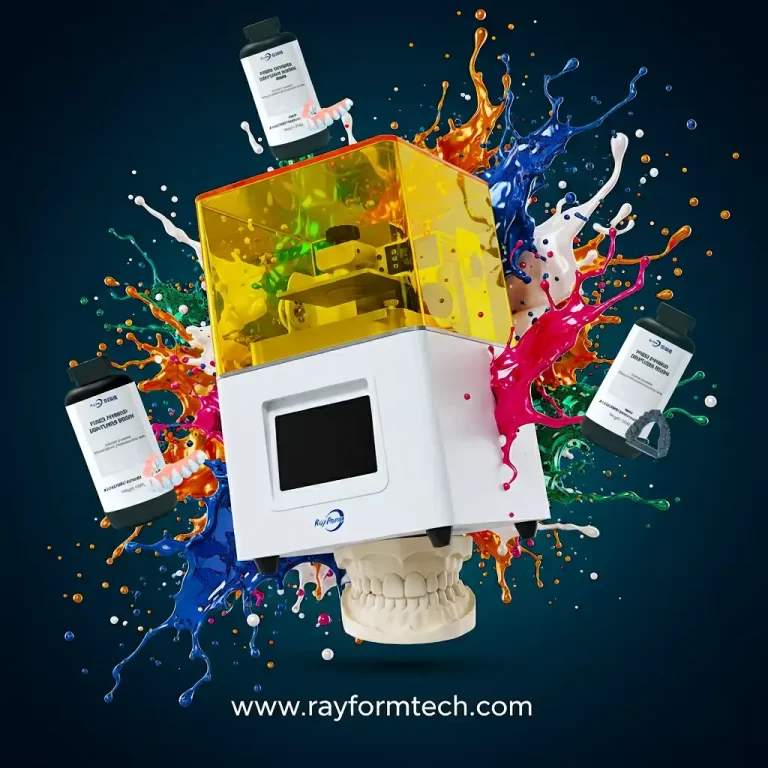

Why FDA Clearance for Dental Resin Matters?If you run a dental lab, DSO, or digital production center, you are probably flooded with “biocompatible” dental resins and 3D printing materials. Labels look similar. Claims sound reassuring. But only some of these materials actually have FDA clearance for dental resin, and that difference matters for patient safety, audits, and your long-term business.
In this article, we unpack what “FDA cleared” really means for dental resins. We’ll look at how clearance is obtained, what kind of testing is required, how it links to ISO and ADA standards, and what practical checks your team can use when selecting materials and suppliers.
We’ll also show how a specialized provider like RayForm Technology[1] — focused on high-precision dental 3D printers and photopolymer resins — builds regulatory thinking into its end-to-end digital production solutions for labs, DSOs, OEMs, and aligner manufacturers.
The U.S. Food and Drug Administration (FDA) is the federal agency that oversees the safety and effectiveness of medical products, including dental materials and devices. Through rigorous review and ongoing monitoring, the FDA helps ensure that products used in patient care meet strict standards for safety, performance and quality.
The regulatory context: why dental resin is not “just a material”
Dental resins are not ordinary plastics. In the US, many of them are regulated as medical devices because they contact teeth, mucosa, or other oral tissues for extended periods.
For example:
- Composite restorative resins and similar devices are typically Class II medical devices that require a 510(k) premarket notification to FDA before marketing in the US, as described in FDA’s guidance for dental composite resin devices[2].
- The FDA’s guidance on use of ISO 10993-1 for biological evaluation of medical devices[3] explains how manufacturers must evaluate cytotoxicity, sensitization, and irritation for materials that contact mucosal membranes over time.
- Standards such as ISO 10993-1[4] and ADA resources on materials for direct restorations[5] provide structured approaches to biocompatibility testing and performance requirements for dental materials.
At the same time, digital dentistry is changing how resins are used. Labs and DSOs now depend on:
- High-throughput model resins for clear aligner production
- Surgical guide resins placed directly in the mouth
- Temporary crown and bridge resins for multi-unit restorations
- Splint and night-guard materials that may be worn overnight
Reviews of “biocompatible” 3D printing resins show that information about intended use, certifications, and post-processing can be inconsistent or incomplete, making safe selection difficult for users in practice.One review of biocompatible 3D-printing resins[6]
This is why a clear regulatory overview is essential for decision-makers in labs, DSOs, and OEMs. Without it, it is easy to underestimate risk or overestimate the protection offered by generic labels.
What “FDA clearance for dental resin” actually means
When a dental resin is FDA cleared, it usually means the following:
- The resin is classified under a specific product code (for example, dental composite resins under 21 CFR 872.3690 or related categories), as discussed in FDA’s composite resin device guidance[2].
- The manufacturer has submitted a 510(k) notification showing that the device is substantially equivalent to a legally marketed predicate device.
- FDA has reviewed data on biocompatibility, mechanical performance, and labeling and found it acceptable within the defined indications for use, as framed in FDA’s ISO 10993-1 guidance[3].
For the end user, this boils down to three practical things:
- Evidence-based safety
Biological evaluation is carried out in line with frameworks such as ISO 10993-1[4] and relevant dental standards, complemented by FDA expectations for biocompatibility data in 510(k) submissions.FDA ISO 10993-1 guidance[3] - Clear indications and limitations
Cleared device labeling spells out what the resin can be used for (for example, “temporary crowns and bridges up to seven units”) and under what processing conditions, similar to how commercial 3D-printed provisional materials such as Formlabs’ temporary crown resins describe their indications and limits.Formlabs Premium Teeth Resin 510(k) announcement[7] - Traceability for audits and incidents
The resin has a 510(k) number and traceable regulatory history in FDA databases, which is critical for DSOs, hospital systems, and multi-site labs that must demonstrate robust documentation and risk management.
A simple framework for evaluating a dental resin
When you evaluate a new resin, you can use a three-step framework:
- Step 1: Match indications to your application
Check whether the resin’s cleared indications match your intended use (e.g., temporary crowns vs. diagnostic models only). A material cleared only for “models” should not be used as a long-term intraoral provisional. - Step 2: Confirm FDA path and status
Ask the supplier for the 510(k) number, product code, and classification. Cross-check these details in the FDA’s public 510(k) database, using information aligned with FDA’s dental composite resin device guidance[2]. If the supplier cannot provide this information for the US market, treat the resin as not FDA cleared for that use. - Step 3: Validate the end-to-end workflow
Clearance is granted for a device under specific processing steps. Confirm that your printer, wash, and cure workflow match the cleared instructions or a validated compatibility matrix, such as a resin–printer compatibility guide and standardized process package offered by integrated solution providers like RayForm Technology[1].
RayForm, for example, provides detailed printing parameter sheets, post-processing SOPs, and compatibility information for its dental printers and resins, helping labs move from “we can print” to controlled, scalable production supported by documented quality and compliance.RayForm Technology — dental 3D solutions[1]
Comparing material choices at a glance
Here is a simple way to compare your resin options:
| Resin option | When it fits | Key parameters to check | Notes |
|---|---|---|---|
| Option A: Resin with relevant FDA 510(k) clearance | You operate in or sell into the US, and the resin is used for intraoral applications or long-term contact | 510(k) number, product code, indications for use, validated printer/workflow | Preferred choice for DSOs, central production centers, and clinics in regulated markets |
| Option B: “Dental” resin without US clearance | Non-US markets with different rules; purely educational or demonstration models | Local regulatory status (e.g., EU MDR, regional approvals), biocompatibility reports, limited indications | May be acceptable for non-clinical or non-US use; still requires risk assessment |
| Option C: Experimental or in-house resin | R&D and internal testing only | Full risk analysis, ISO 10993 plan, ethics/IRB when used in research | Not suitable for routine clinical production without a regulatory strategy and expert guidance |
Evidence and data: what stands behind FDA clearance
Results summary
- Biocompatibility frameworks. FDA’s guidance on use of ISO 10993-1[3] outlines a systematic, risk-based approach to biological evaluation of medical device materials, including mucosa-contacting dental devices that use polymeric resins.
- Dental-specific standards. The American Dental Association’s overview of materials for direct restorations[5] and technical whitepapers on dental device biocompatibilitysuch as this dental device biocompatibility whitepaper[8] provide guidance tailored to dental materials and their clinical use.
- 3D printing resins in practice. Reviews of biocompatible 3D printing resins emphasize challenges around incomplete information on certifications and post-processing, stressing the importance of clear labeling and validated workflows.Review of biocompatible 3D printing resins[6]
- Real-world case examples. 3D printed resins for temporary crowns and bridges, such as products highlighted in Formlabs’ Premium Teeth Resin clearance announcement[7], show that dental 3D printing materials can meet the regulatory bar for demanding indications when properly validated.
Core risks — and how FDA clearance helps mitigate them
Using non-validated or uncleared resins for demanding indications can introduce several risks:
- Biological risk. Inadequately tested materials may leach residual monomers or additives, leading to irritation, sensitization, or systemic exposure, which is why ISO 10993-1 and FDA’s related guidance put so much emphasis on cytotoxicity and sensitization endpoints.FDA ISO 10993-1 guidance[3]
- Mechanical risk. Under-cured or poorly formulated resins may fracture or wear prematurely, leading to failures in splints, provisionals, or guides — a concern highlighted in both industry whitepapers and ADA materials guidance.ADA materials overview[5]Dental device biocompatibility whitepaper[8]
- Regulatory and liability risk. For organizations under stricter oversight (DSOs, hospitals, large labs), using non-cleared materials for intraoral applications can complicate audits, insurance, and incident investigations.
FDA clearance does not remove all risk, and it is not a guarantee of perfect clinical outcomes. However, it confirms that a structured evaluation has been performed and that the device meets requirements within its indicated use.
Implementation checklist for labs and DSOs
You can turn this into a practical, internal buyer checklist:
- Regulatory status
- Ask for 510(k) number and product code if you operate in the US.
- Check whether the indication matches your use (e.g., “temporary crown” vs. “model only”), using the criteria set out in FDA’s composite resin guidance[2].
- Standards and testing
- Request a summary of biocompatibility testing (e.g., ISO 10993 endpoints, ADA/ISO dental standards) and confirm alignment with FDA’s ISO 10993-1 guidance[3].
- Confirm mechanical tests relevant to the application (flexural strength, wear, heat deflection temperature, etc.), as suggested in technical whitepapers on dental device performance.Dental device biocompatibility whitepaper[8]
- Workflow validation
- Verify validated printer models, exposure settings, and post-processing steps.
- Confirm whether your current printers are supported, or if an integrated solution (printer + resin + process) is recommended, using documentation from suppliers such as RayForm Technology[1].
- Documentation and support
- Ensure the supplier provides IFU, MSDS, TDS, and regulatory certificates in a central documentation hub.
- For larger networks, ask for help designing a repeatable implementation checklist and training program for new sites.
A provider like RayForm Technology[1], which focuses on end-to-end hardware, resin, process, and service, can help DSOs and labs standardize and replicate validated workflows across sites rather than rebuilding them from scratch.
FAQs and practical concerns
Q1. Is FDA clearance legally required for every dental resin I use?
In the US, dental resins intended as medical devices (for example, restorative composites, denture base resins, temporary crowns and bridges, surgical guides) are usually subject to FDA regulations, often under Class II with a 510(k) requirement, as described in FDA’s guidance for dental composite resin devices[2]. Some uses (education models, non-clinical demos) may fall outside medical device scope, and state-level practice rules for labs and dentists can also apply. For detailed obligations, you should consult your local regulations and legal or regulatory experts; this article is not legal advice.
Q2. What is the difference between “FDA cleared”, “FDA approved”, and “FDA registered”?
For dental resins, you will almost always see “FDA cleared”, meaning a 510(k) premarket notification was reviewed and found substantially equivalent to a predicate device. “FDA approved” is a different, more demanding process generally applied to certain Class III devices or drugs, not typical dental resins. “FDA registered” often refers to establishment registration and does not by itself mean the specific resin has been cleared for a clinical indication — a distinction that is emphasized in many regulatory education resources from professional bodies and consultants.Dental device biocompatibility whitepaper[8]
Q3. How do I verify a resin’s FDA status in practice?
Use the FDA 510(k) database and search by trade name, company, or 510(k) number. Confirm that the product codes and indications match what the supplier claims and what you intend to do with the material. For complex roll-outs, align your internal regulatory overview and procurement process with guidance such as FDA’s composite resin device guidance[2] and FDA’s ISO 10993-1 biological evaluation guidance[3].
Q4. I’m outside the US. Does FDA clearance still matter?
Even in regions with their own frameworks (such as EU MDR), many multinational DSOs, OEMs, and labs treat FDA clearance as a helpful benchmark for clinical materials. It can simplify collaborations with US-based partners and reassure clinicians that a recognized regulator has reviewed safety and performance data. However, you must still comply with your local regulations and standards, as summarized by regional regulators and professional associations alongside global guidance such as ISO 10993-1[4].
Conclusion and next steps
FDA clearance for dental resin is more than a marketing badge. It signals that the material has been reviewed within a structured regulatory framework, backed by biocompatibility and performance data, and supported by clear indications for use.
For labs, DSOs, OEMs, and aligner manufacturers, integrating FDA-cleared resins into a well-documented, validated workflow can:
- Support patient safety and clinician confidence
- Reduce regulatory and liability risk
- Make multi-site scaling and audits more predictable
Your next steps could be:
- Audit your current material portfolio. Map which resins have FDA clearance for their actual indications and where there are gaps.
- Standardize workflows. Use tools like a resin compatibility matrix, implementation checklist, and centralized documentation hub to align printers, resins, and post-processing, ideally in partnership with technology providers such as RayForm Technology[1].
- Engage with specialized partners. Work with providers that offer integrated solutions (printer + resin + process + service) and support you through quality and regulatory reviews.
By treating regulatory clearance as a design requirement — not an afterthought — you can build a digital dental production system that is not only fast and scalable, but also trusted by clinicians, patients, and regulators.
References
- RayForm Technology — digital dental 3D printing solutions
- U.S. FDA — Dental Composite Resin Devices: Premarket Notification (510(k) Submissions) Guidance
- U.S. FDA — Use of ISO 10993-1 “Biological evaluation of medical devices — Part 1: Evaluation and testing”
- ISO — ISO 10993-1:2018 Biological evaluation of medical devices — Part 1: Evaluation and testing
- American Dental Association — Materials for Direct Restorations
- Journal article — Biocompatible 3D printing resins for medical applications: a review of safety information
- Formlabs — Premium Teeth Resin receives FDA 510(k) clearance for temporary crowns and bridges
- IFYBER — Evaluating Biocompatibility of Dental Medical Devices (whitepaper)