
Casablanca, Morocco · 7–10 May 2026
From May 7 to 10, 2026, the seventh edition of Morocco Dental Expo took over the International Center of Exhibitions of Casablanca (ICEC) in Aïn Sebaâ. By any measure it was a milestone year: the organizer’s own count puts the show at more than 7,500 professional visitors and 135 national and international companies across over 8,000 square meters[2]. Reporting from inside the hall, regional media described 3D printing and artificial intelligence as defining themes of the edition[1], and the organizer’s framing of the event as the largest oral health exhibition on the African continent was echoed by multiple outlets[3].
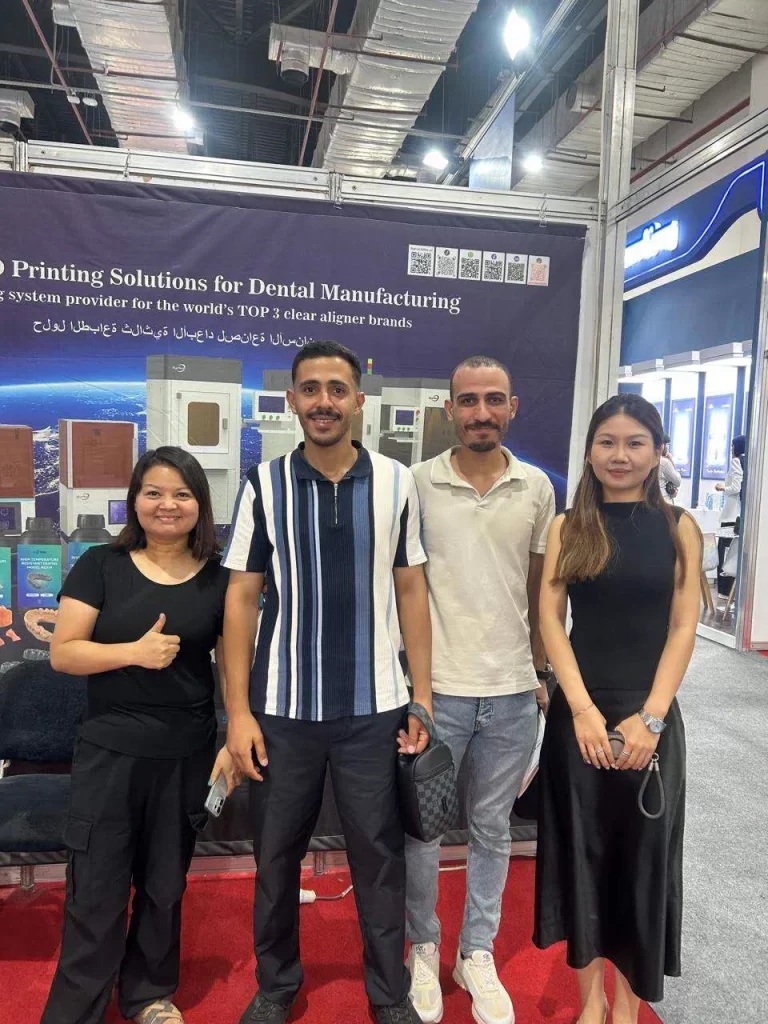
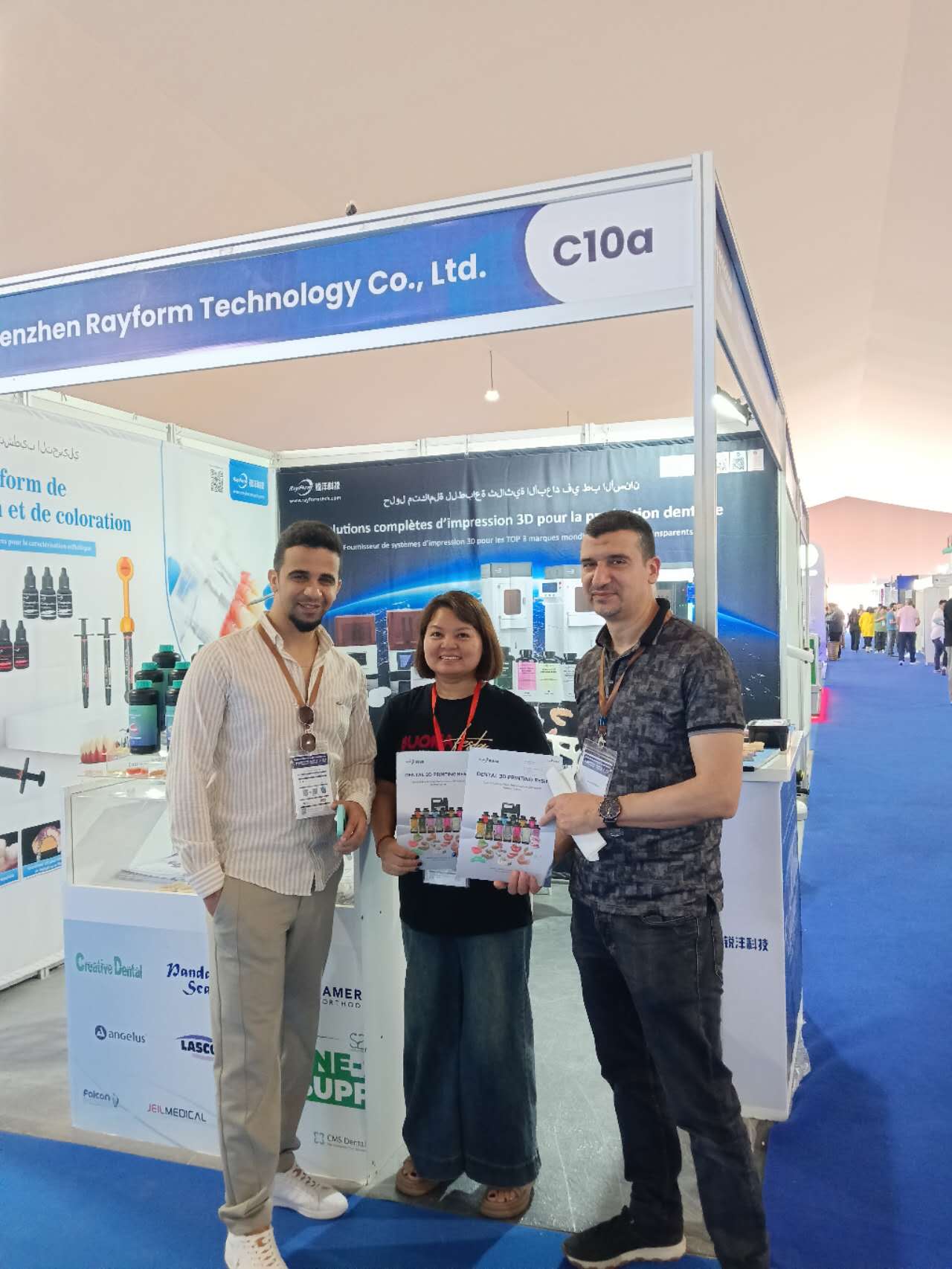
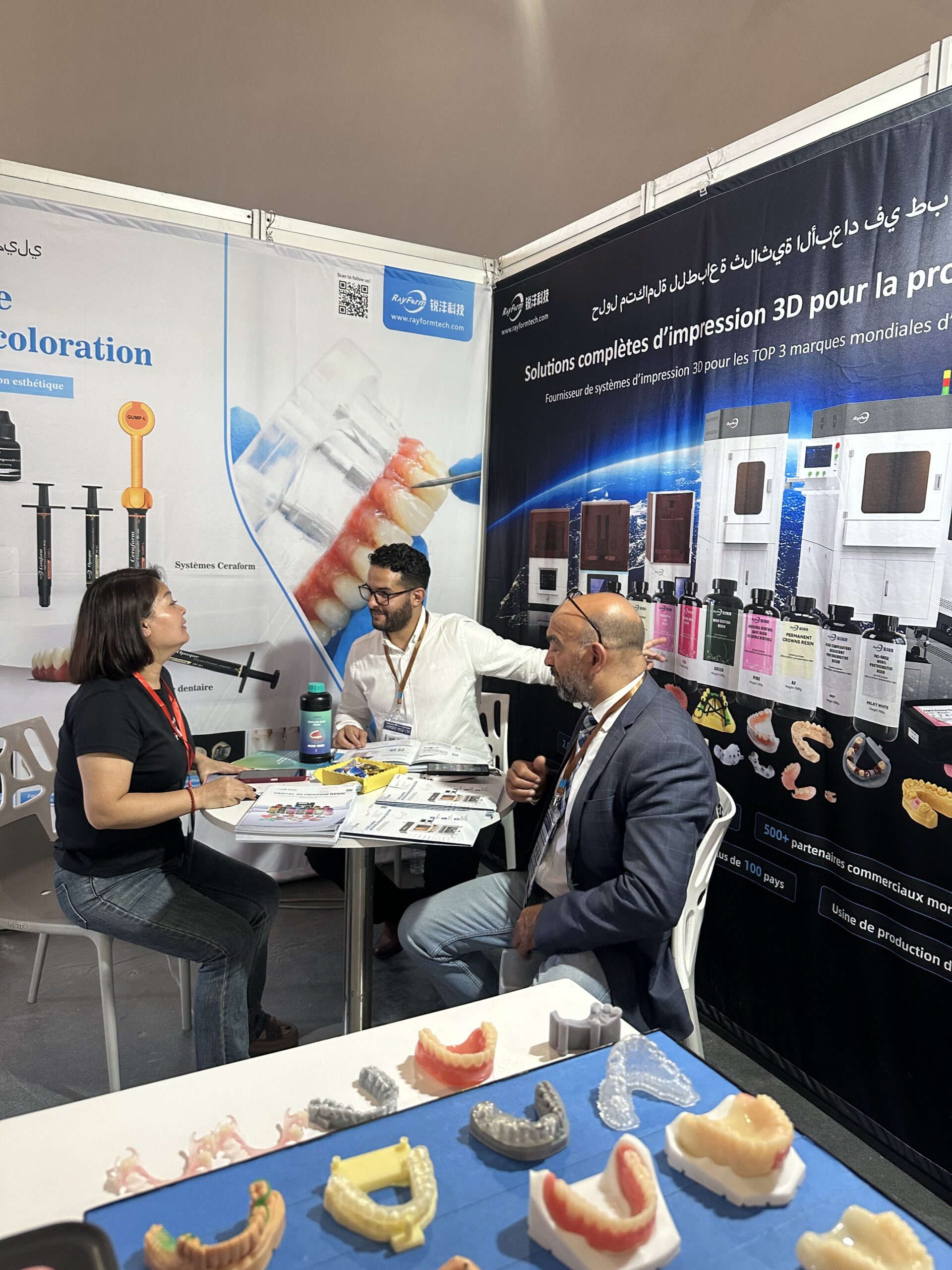
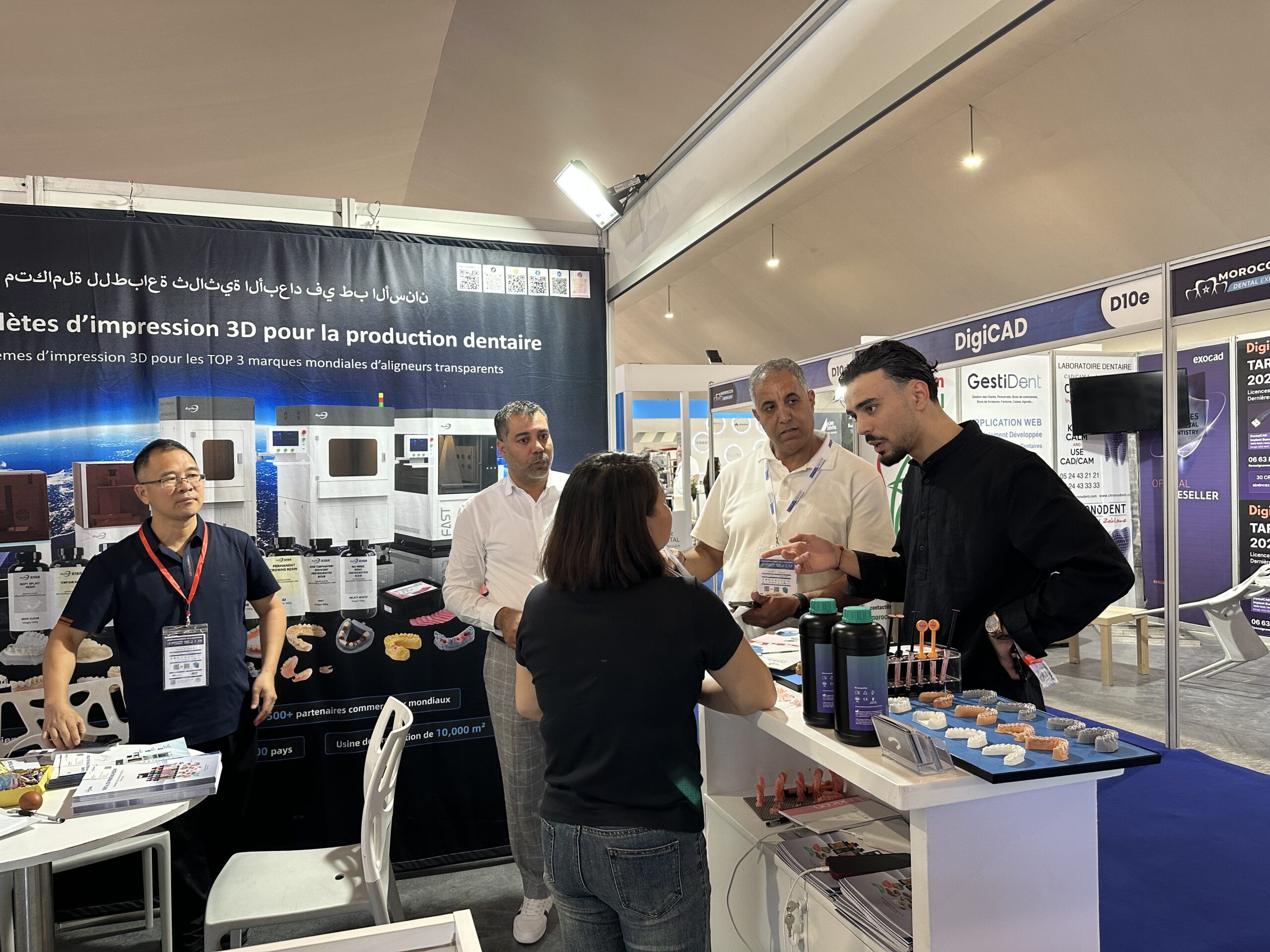
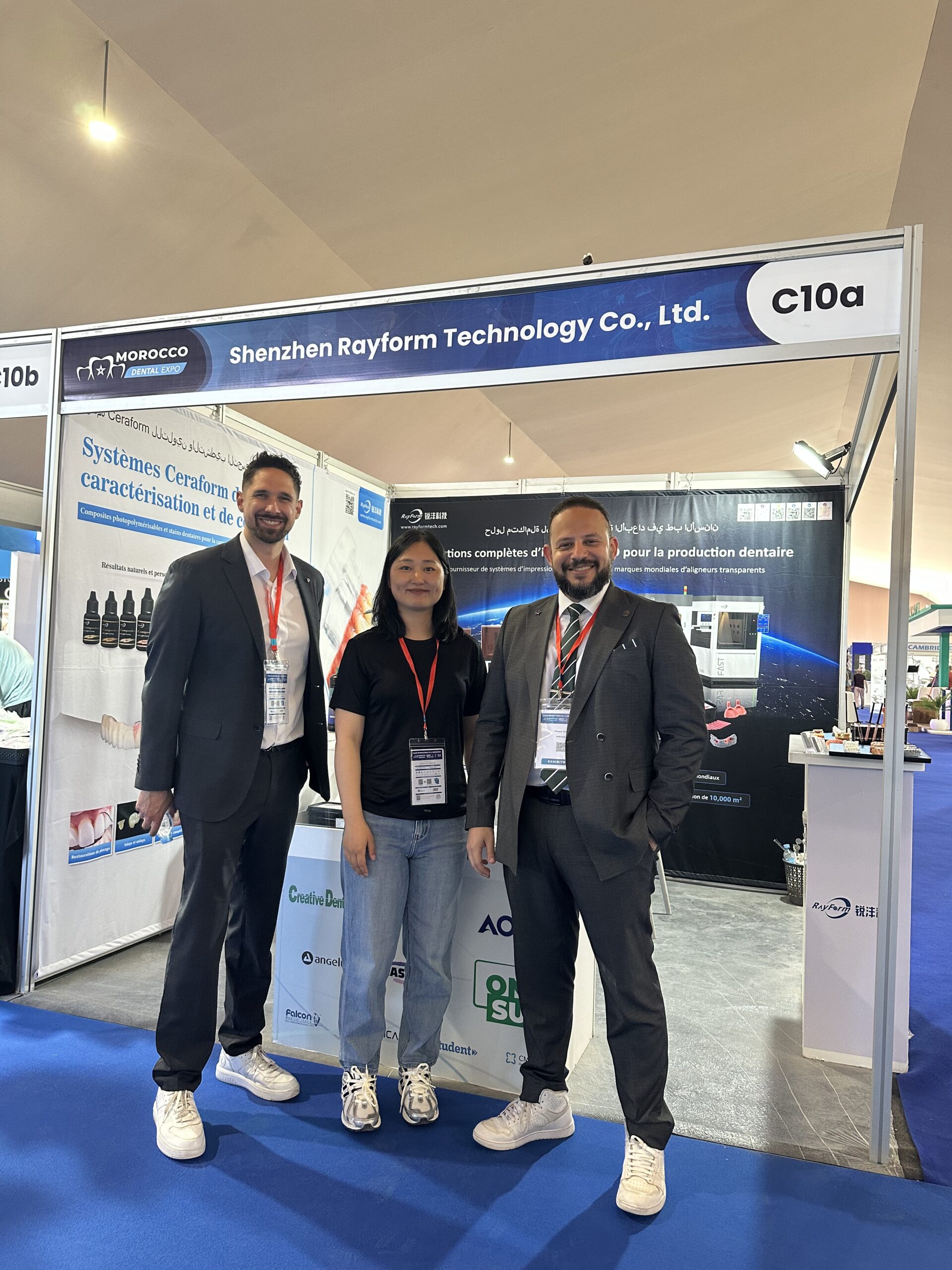
RayForm took part as an exhibitor at Stand C10a, where our team ran live print demonstrations, walked visitors through our open-system resin range, and held one-on-one workflow consultations for dental laboratories, clinics, and aligner producers across North Africa and the wider Mediterranean. This article is our recap — not a press release, but a working summary of what we saw, what visitors asked us, and what we think the data and conversations on the floor tell us about where digital dentistry in this region is heading.
Morocco Dental Expo 2026 in Numbers
A quick reference panel, useful if you missed the show and want to size it up:
| Metric | 2026 (7th edition) |
|---|---|
| Dates | May 7–10, 2026 |
| Venue | ICEC Ain Sebaâ, Casablanca[5] |
| Professional visitors | 7,500+[2] |
| Exhibitors | 135 national and international companies[2] |
| Exhibition area | 8,000+ m²[2] |
| International participation | Morocco, France, Italy, Germany, China, Egypt, UAE, Pakistan[1] |
| Featured themes (organizer) | 3D printing, artificial intelligence, implantology, orthodontics, imaging[1] |
| Scientific program | 35+ conferences, 40+ hours of continuing education[1] |
Two things stand out. First, the organizer explicitly named 3D printing and AI as headline themes[1] — a signal that the African market is no longer treating digital dental manufacturing as an emerging curiosity. Second, the spread of countries represented on the exhibitor list shows that suppliers from Europe, the Middle East, and Asia all view North Africa as a serious market, not a side trip.
RayForm at Stand C10a — What We Brought to Casablanca
We deliberately built our Stand C10a lineup around the materials that we believe matter most to a lab or clinic that is moving from one or two printed cases per week toward predictable production. Three resins did most of the talking:
Surgical Guide Resin — For Predictable Guided Implant Workflows
The Surgical Guide Resin is one of the most discussed products at any North African show, because guided implant surgery is one of the cleanest digital wins for a clinic: scan, plan, print, sterilize, place. Our formulation prints with low warping on common 385/405 nm LCD and DLP systems and post-cures into a rigid, dimensionally stable guide. For more on this resin and its parameters, see our surgical guide resin page.
High Precision Planting Model Resin — A Foundation Material for Implant Cases
If a lab gets the model wrong, every downstream restoration inherits the error. Our high-precision implant model resin is positioned as a foundation material — sized to capture implant analog positions and arch geometry within a working tolerance acceptable for prosthetic planning. Many visitors at Stand C10a were specifically interested in whether they could run this resin on the open-system printers they already own, rather than committing to a closed material ecosystem; the answer is yes, and a parameter starting point is available in our printer parameter database.
Invisible (Flexible) Denture Base Resin — A Differentiator for North African Labs
Flexible partials are a strong fit for the North African market, where patient comfort and aesthetics are valued and where many clinics still rely on injection molding workflows that are slow and labor-intensive. Our Invisible Denture Base Resin prints a translucent, pink, gum-shade base that flexes slightly for retention without metal clasps. Bonding teeth, polishing technique, and color stability were the three most asked-about topics — all covered in our internal Flexible Denture Q&A and demoed live at the booth.
Three Conversations We Had Over and Over at Stand C10a
Trade-show conversations are a good barometer of where a market actually is — versus where vendors hope it is. Three questions came up so often we should treat them as the genuine state-of-play for digital dentistry in North Africa right now.
“Will your resin work with my existing LCD/DLP printer?”
This was the single most common opening question. The honest answer: open-system 385 / 405 nm LCD and DLP printers are widely compatible with our resins, and we maintain a printer parameter database to give labs a verified starting point[6]. Compatibility is not just a chemistry question — it is also a process question (cure time, layer thickness, post-wash solvent, post-cure exposure). We always tell visitors to ask for a sample bottle and validated parameters before they commit to a SKU at volume.
“What’s the realistic cost per arch for a 3D-printed denture base?”
Per-arch economics is the question that converts curiosity into purchase orders, and we don’t dodge it. Material cost per arch is only one input; the bigger drivers are throughput per shift, rework rate, and the cost of the model and tray that surround the base. We are conservative about making single-number claims and instead walk visitors through a worked example using their own labor cost and printer specs.
“Can you ship from China to Morocco — and how does support work in French?”
Logistics from Shenzhen to Casablanca is well-trodden, and freight, customs paperwork, and lead times are all manageable. Support in French was a frequent ask, particularly from Algerian and Tunisian visitors who stopped by; we offer technical support in English with French-language resources on key parameter and post-processing documents.
What the Show Floor Told Us About Africa’s Digital Dental Shift
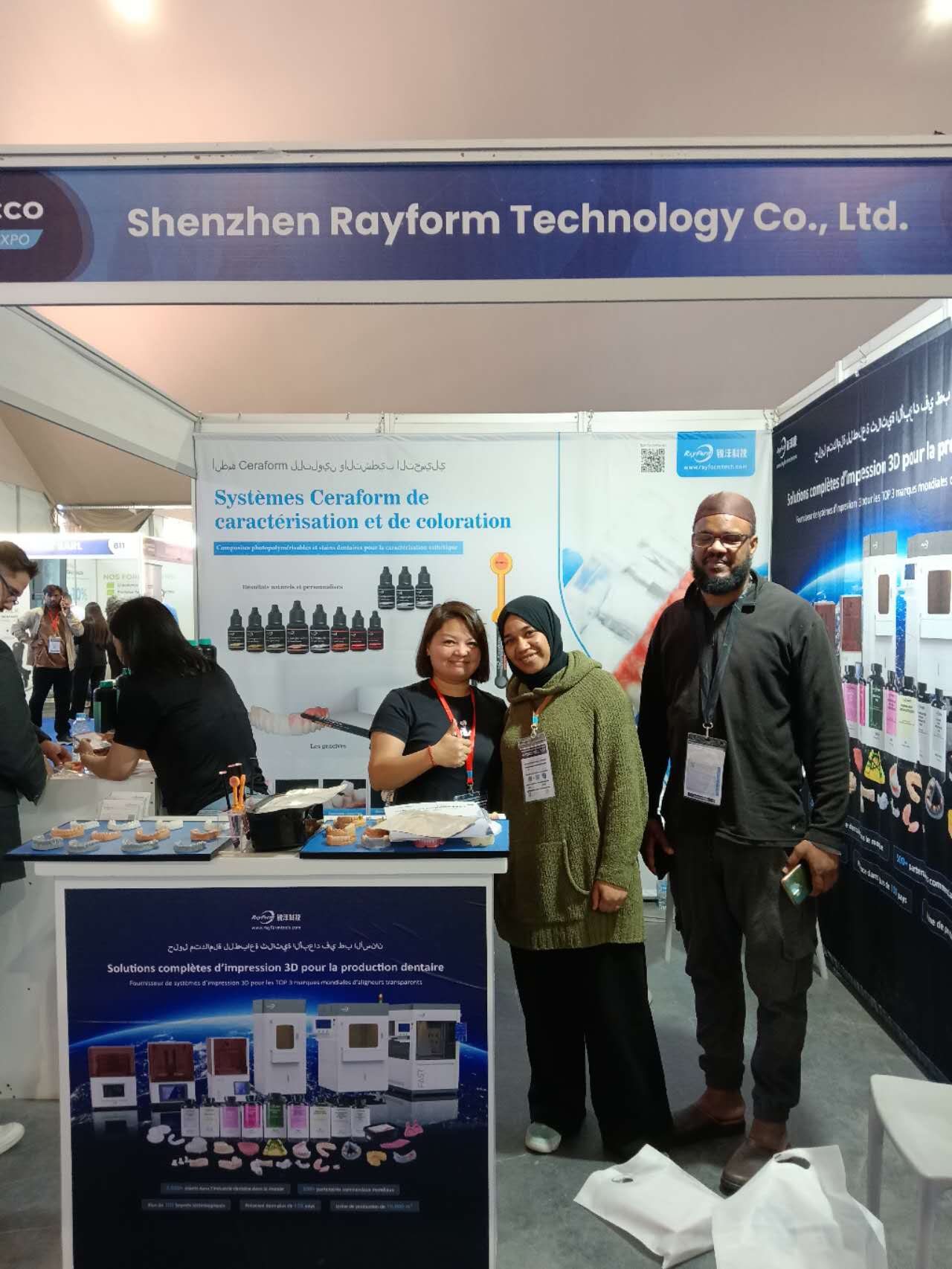
Stepping back from our own booth, three observations from the Casablanca floor stuck with us. They line up with broader trends we have seen at international shows in 2025 and 2026[8], but they have a specifically African flavor.
The first is that digital adoption in North Africa is being led by procedure type rather than by lab size. Implant surgical guides, clear aligners, and clear retainers are the entry points, often before a lab fully digitizes its crown-and-bridge work. That order matters when planning training and which resin to stock first.
The second is the gap between scanner penetration and lab digital capacity. Intraoral scanners are now common in mid-tier clinics across Morocco, but many of those scans still terminate in a traditional analog workflow at the lab. This is exactly the bottleneck that 3D printing is best placed to relieve — provided the lab has a stable model, guide, or splint resin and an SOP that turns one good print into a hundred good prints.
The third is the role of continuing education. The show’s 35-conference program covering implantology, orthodontics, imaging, AI, and 3D printing[1] is not just a perk — it is part of the buying decision. Visitors who attended a session on digital dentures spent noticeably more time at our booth asking about parameter windows and post-cure protocols, suggesting that education is the real engine of conversion in this market.
Actionable Takeaways for Labs and Clinics Entering Digital Dentistry
If you did not make it to Casablanca but you are reading this in a lab or clinic that is considering digital dentistry seriously this year, the below is a fair distillation of what we would tell you on the floor.
- Start with one procedure, not “everything digital.” Pick the procedure where digital wins are clearest — surgical guides, splints, or denture bases — and stabilize that workflow before expanding.
- Choose open-system printers when possible. Open systems let you select the right resin per application, not the resin your vendor happens to sell.
- Define your parameter window before you scale. A consistent layer thickness, exposure setting, wash time, and cure cycle matters more than chasing the latest hardware[7].
- Document a post-processing SOP. Cleaning, drying, curing, and inspection should be written down so the result does not depend on which technician was on shift that day.
- Track rework, not just print success. A single print that came out is not a signal. A 95%+ acceptance rate across a batch of 30 is.
Decision Checklist: Bringing Open-System 3D Printing Into Your Practice
| Step | Question to Ask |
|---|---|
| Define application | Which procedure (guide / model / denture base / splint / aligner / temp crown) will you 3D print first? |
| Choose printer | Is it an open-system 385 / 405 nm LCD or DLP, with adjustable parameters? |
| Validate resin | Did the vendor provide a verified parameter starting point for your specific printer? |
| Plan post-processing | Do you have a dedicated wash + cure setup with a written SOP? |
| Quality control | Have you defined acceptance criteria (fit, dimensional tolerance, surface finish)? |
| Inventory and shelf life | Are you ordering quantities matched to your shelf-life tolerance and turnover? |
| Support and language | Does the vendor support you in a language your technicians work in? |
| Compliance | RayForm dental resins are CE-marked. Request each resin’s Technical Data Sheet (TDS) for its stated intended-use indications and biocompatibility class, and for North African markets (Morocco, Algeria, Tunisia) confirm any local registration or importer requirements that apply alongside the CE file. |
FAQs — Morocco Dental Expo 2026 and Dental 3D Printing in North Africa
Q1: When was Morocco Dental Expo 2026 held and where?
The 7th edition of Morocco Dental Expo was held from May 7 to 10, 2026, at the International Center of Exhibitions of Casablanca (ICEC) in Aïn Sebaâ[2][5].
Q2: How large was the 2026 edition?
The organizer reported more than 7,500 professional visitors and 135 national and international exhibiting companies across over 8,000 square meters of floor space[2].
Q3: Why is Morocco Dental Expo considered Africa’s largest dental show?
The organizer positions it as the largest oral health exhibition on the African continent since its launch in 2010, and that framing was widely repeated in regional reporting around the 2026 edition[3].
Q4: What were the headline themes of the 2026 edition?
Coverage from the show identified 3D printing and artificial intelligence as featured themes alongside implantology, orthodontics, and medical imaging, supported by a scientific program of more than 35 conferences[1].
Q5: Which RayForm products were featured at Stand C10a?
RayForm focused on three resins at Stand C10a: Surgical Guide Resin, High Precision Planting Model Resin, and Invisible (Flexible) Denture Base Resin — chosen to match the procedures most North African labs and clinics begin their digital workflow with[6].
Q6: I run an open-system LCD or DLP printer. Can I use RayForm resins?
Open-system printers operating at 385 nm or 405 nm are broadly compatible with RayForm’s resin lineup. Verified parameter starting points are maintained for common printers; request a sample before committing to volume[6].
Q7: What was RayForm’s biggest takeaway from the show floor?
Digital adoption in North Africa is being driven by specific procedures (guides, partials, aligners) more than by lab size, and education is doing more of the conversion work than headline product launches.
Conclusion — Casablanca Was a Beginning, Not an Endpoint
If we had to summarize Stand C10a in a single sentence, it would be this: the North African dental market is past the “is digital real?” stage and squarely into the “how do we make digital production stable, repeatable, and affordable?” stage. That is the conversation RayForm is built for, and that is the conversation we will keep having with the labs, clinics, and aligner producers we met in Casablanca this May.
If you stopped by Stand C10a and we ran out of time to finish a discussion — or if you missed the show entirely — the easiest next steps are to request resin samples and validated print parameters, or to talk through a single procedure end-to-end with our team. Start a conversation through our contact page, or browse the full dental resin lineup to map our materials against your case mix.
References
- Morocco World News — Casablanca Exhibition Highlights Promising, Growing Digitization of Dental Care
- Aujourd’hui le Maroc — Plus de 7.500 visiteurs au Morocco Dental Expo 2026
- Barlaman Today — Casablanca Hosts Africa’s Largest Dental Health Expo
- Mesa Italia — Morocco Dental Expo 2026: 7-10 May Casablanca (event reference page)
- Dental News — ICEC Ain Sebaâ Exhibition Center in Casablanca, Morocco
- RayForm Technology — Dental 3D Printing Resins (manufacturer product information)
- RayForm Technology — About / Company Approach to Throughput, Yield, and Repeatability
- Institute of Digital Dentistry — IDS 2025 Highlights the Latest Breakthroughs in Digital Dentistry (used for industry trend cross-reference only)