
Rimini, Italy · 14–16 May 2026
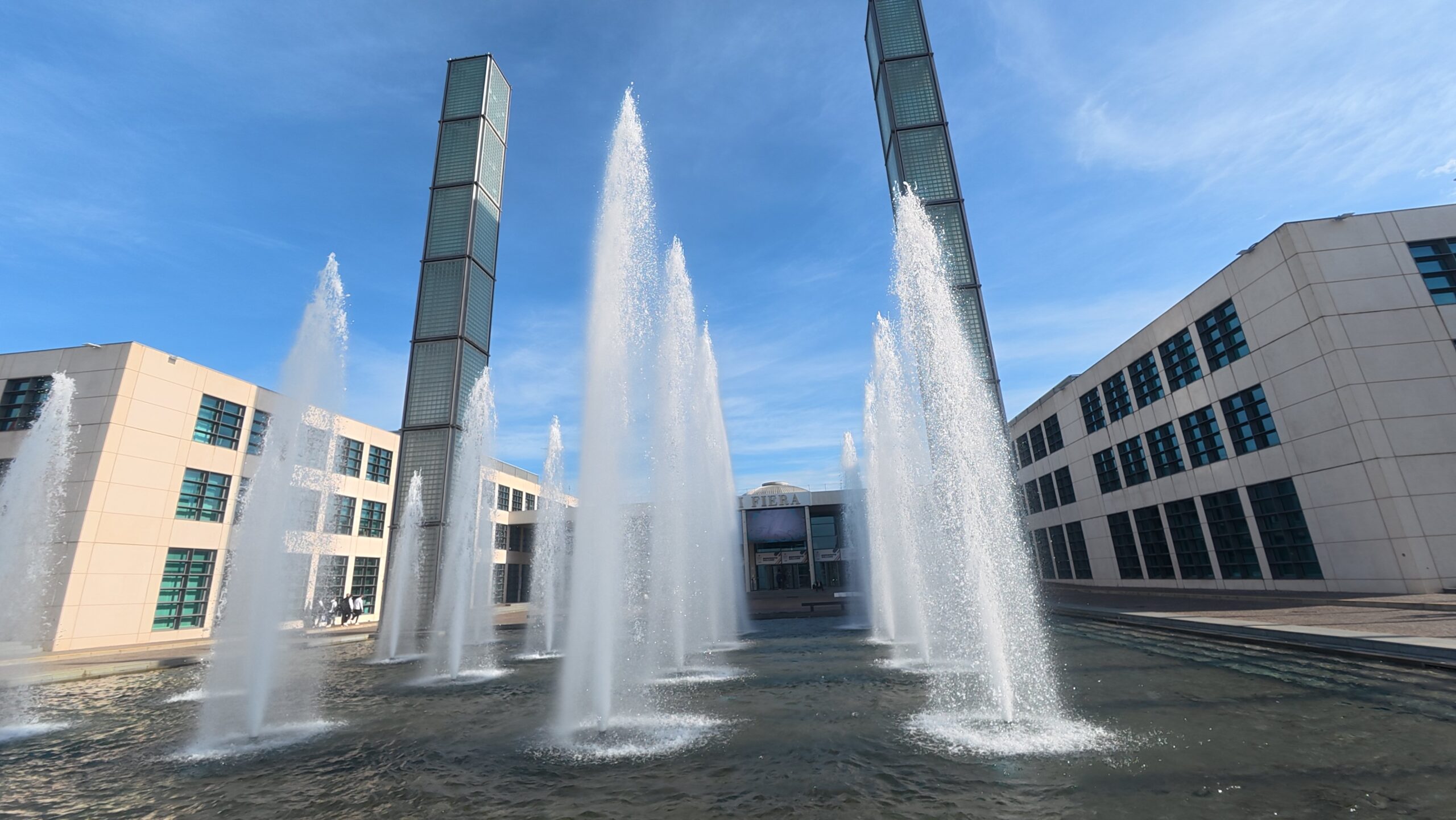
From May 14 to 16, 2026, Italy’s flagship dental show, Expodental Meeting, returned to the Rimini Exhibition Centre’s South Pavilions. The 2026 edition broke the show’s own record on exhibitor count, with more than 400 exhibitors on a floor exceeding 60,000 square meters and international exhibiting companies up roughly 22% year on year[1][3]. The educational and exhibition program was organized into four thematic areas — Expo3D for digital workflows, Tecnodental Forum for laboratory technology, Expodental RDH for hygienists, and Medaesthetica at the dentistry–aesthetics interface — confirming the show’s pivot from “trade fair” toward a structured professional meeting[2][3].
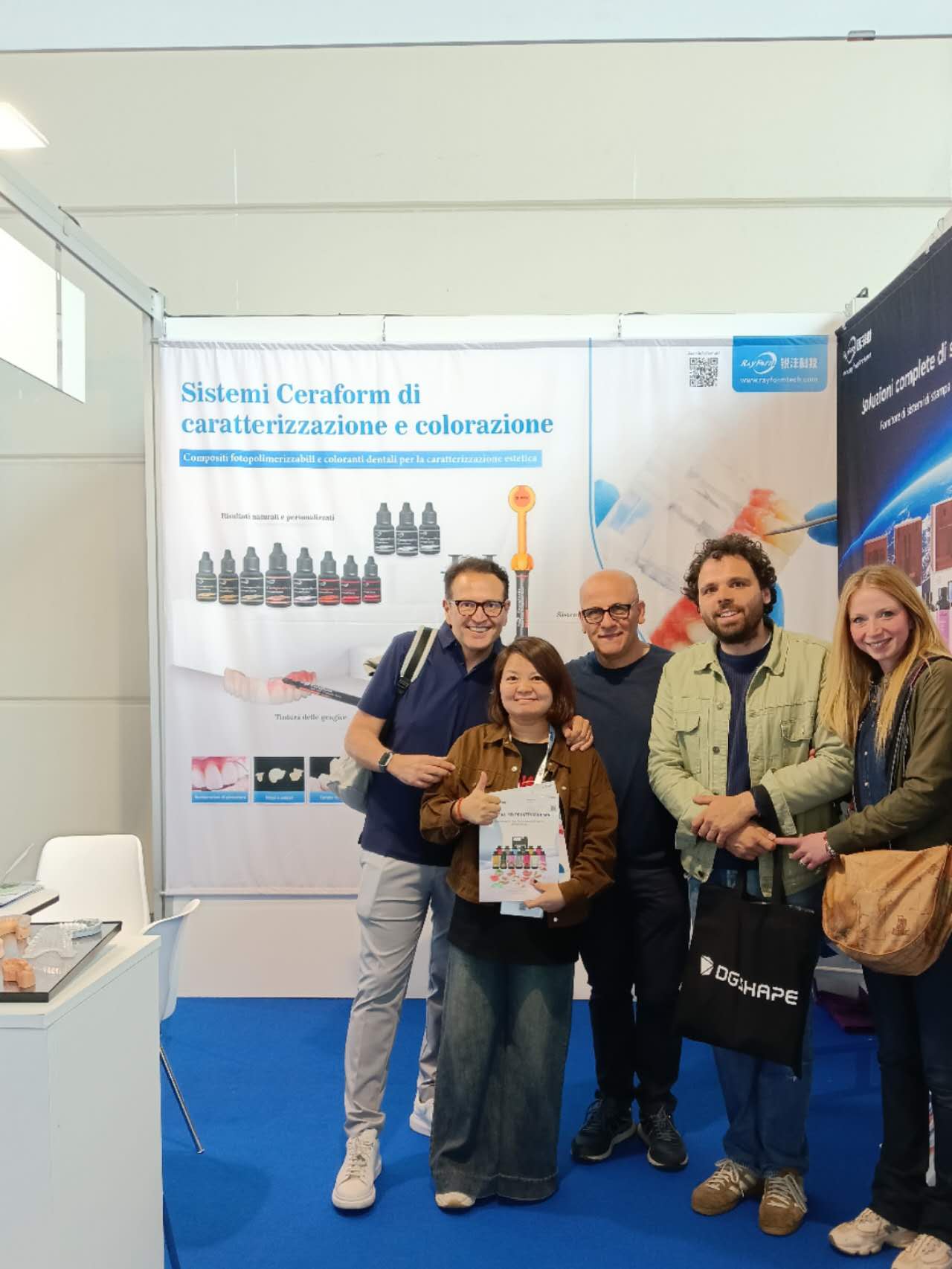
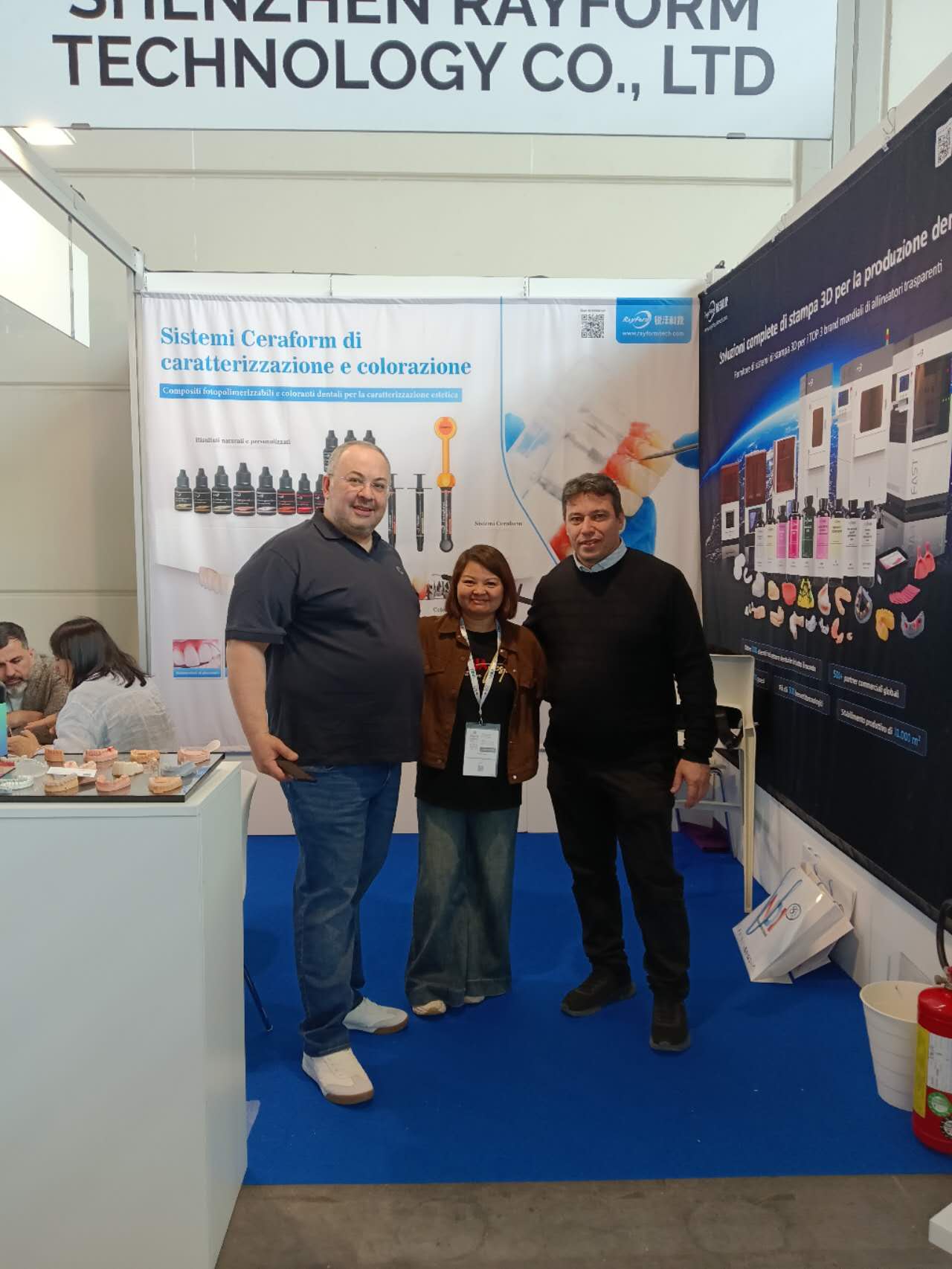
RayForm exhibited as part of the digital materials conversation at Hall A1 Stand 18. Over three days, our team ran live print demonstrations, walked visitors through a focused selection of definitive and orthodontic resins, and held one-on-one consultations with dental laboratories, restorative-focused clinics, and aligner producers from Italy and across the EU. This is our recap of what we showed, what visitors asked, and what we read off the floor about where European digital dentistry is heading in the second half of the decade.
Expodental Meeting 2026 by the Numbers
A quick reference panel for readers who didn’t make it to Rimini:
| Metric | 2026 edition |
|---|---|
| Dates | May 14–16, 2026[3] |
| Venue | South Pavilions, Rimini Exhibition Centre[3] |
| Exhibitors | 400+ (a record for the show)[1] |
| Exhibition area | 60,000+ m²[1] |
| International exhibitor growth | ≈ +22% year on year[1] |
| Thematic areas | Expo3D, Tecnodental Forum, Expodental RDH, Medaesthetica[2][3] |
| Audience | Trade-only (dentists, dental technicians, hygienists, dealers)[3] |
| Opening hours | Thu 09:30–18:00; Fri 09:30–19:00; Sat 09:30–16:30[3] |
Two things to flag from this table. First, +22% international exhibitor growth is a strong signal: Italy continues to function as a Mediterranean hub for the EU dental industry, and foreign manufacturers are voting with their booth budgets. Second, the trade-only access policy keeps the audience denser in qualified buyers — laboratories, clinics, and dealers — which is reflected in the technical depth of the conversations we had at the booth.
Inside the Expo3D Zone — Where Dental 3D Printing Took Center Stage
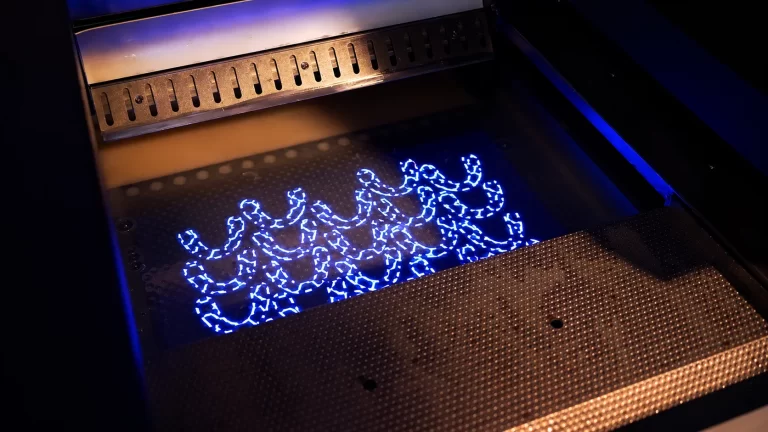
The single most important thing for any company in our category to understand about Expodental 2026 is that digital workflow now has its own dedicated address: Expo3D. The organizer framed Expo3D as a thematic area focused on the digital workflow in dentistry[2][3], and on the floor that translated into clusters of 3D printing OEMs, materials manufacturers, CAD/CAM software vendors, and post-processing equipment makers within walking distance of each other.
A few patterns stood out to us in Expo3D:
- Materials are doing more of the talking than printers. Hardware booths drew crowds at launch moments, but the substantive technical conversations centered on resin chemistry — biocompatibility class, mechanical properties under load, color stability, and validated parameters for specific printers.
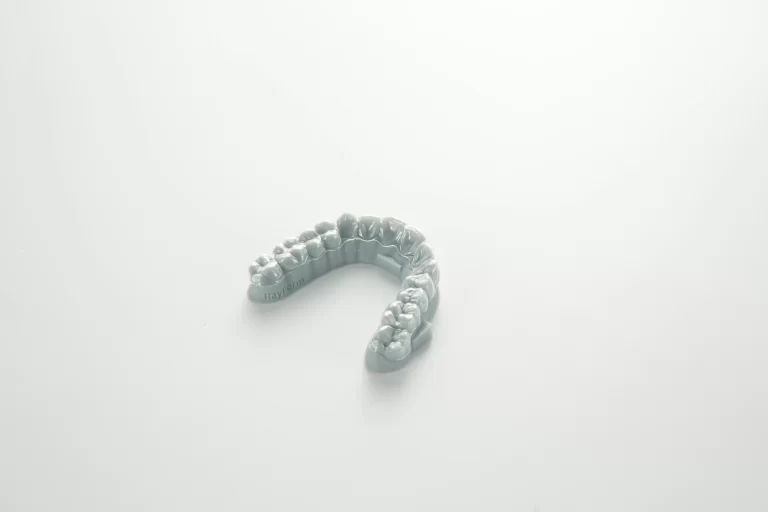
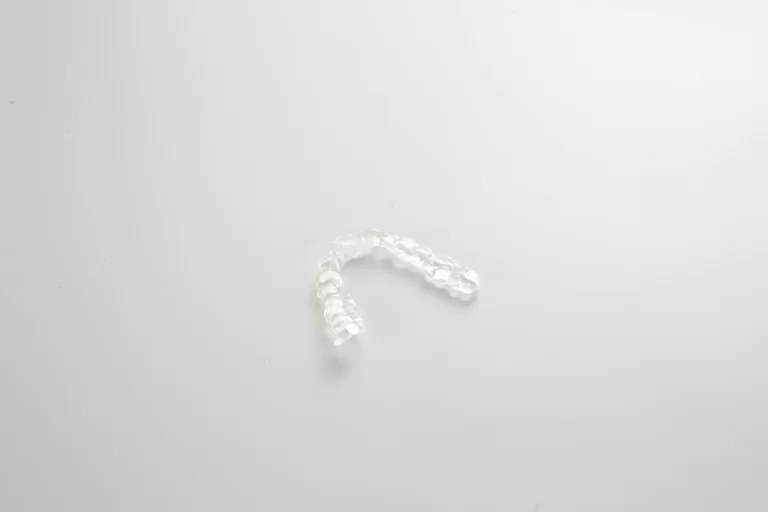
- Direct-print orthodontics moved from “preview” to “practice.” Clear aligners and retainers printed directly from photopolymer resin — rather than thermoformed over a printed model — were a clear theme on the floor, and visitors at our stand asked specifically about direct-print workflows rather than the legacy thermoforming approach.
- Lab AI tools are converging. Multiple software vendors showed CAD interfaces with AI-assisted design steps for crowns, partials, and aligner staging — consistent with the broader 2025–2026 European trajectory reported by industry media[5][6].
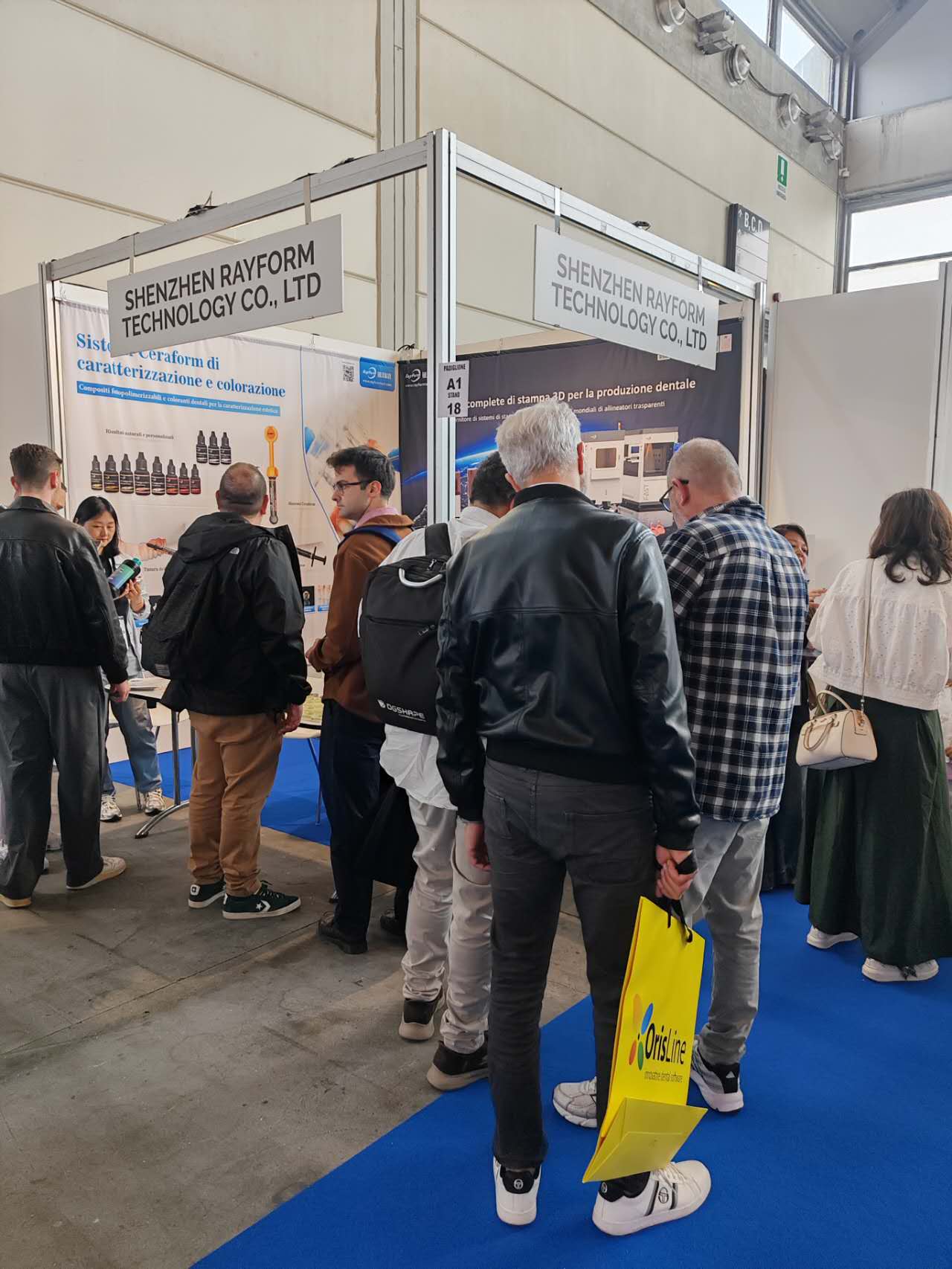
RayForm at Hall A1 Stand 18 — What We Showed in Rimini
We built our Hall A1 Stand 18 lineup around a question we hear repeatedly from European laboratories: “Show me the resin that I can put into definitive cases, not just models and try-ins.” Three materials carried the most weight:
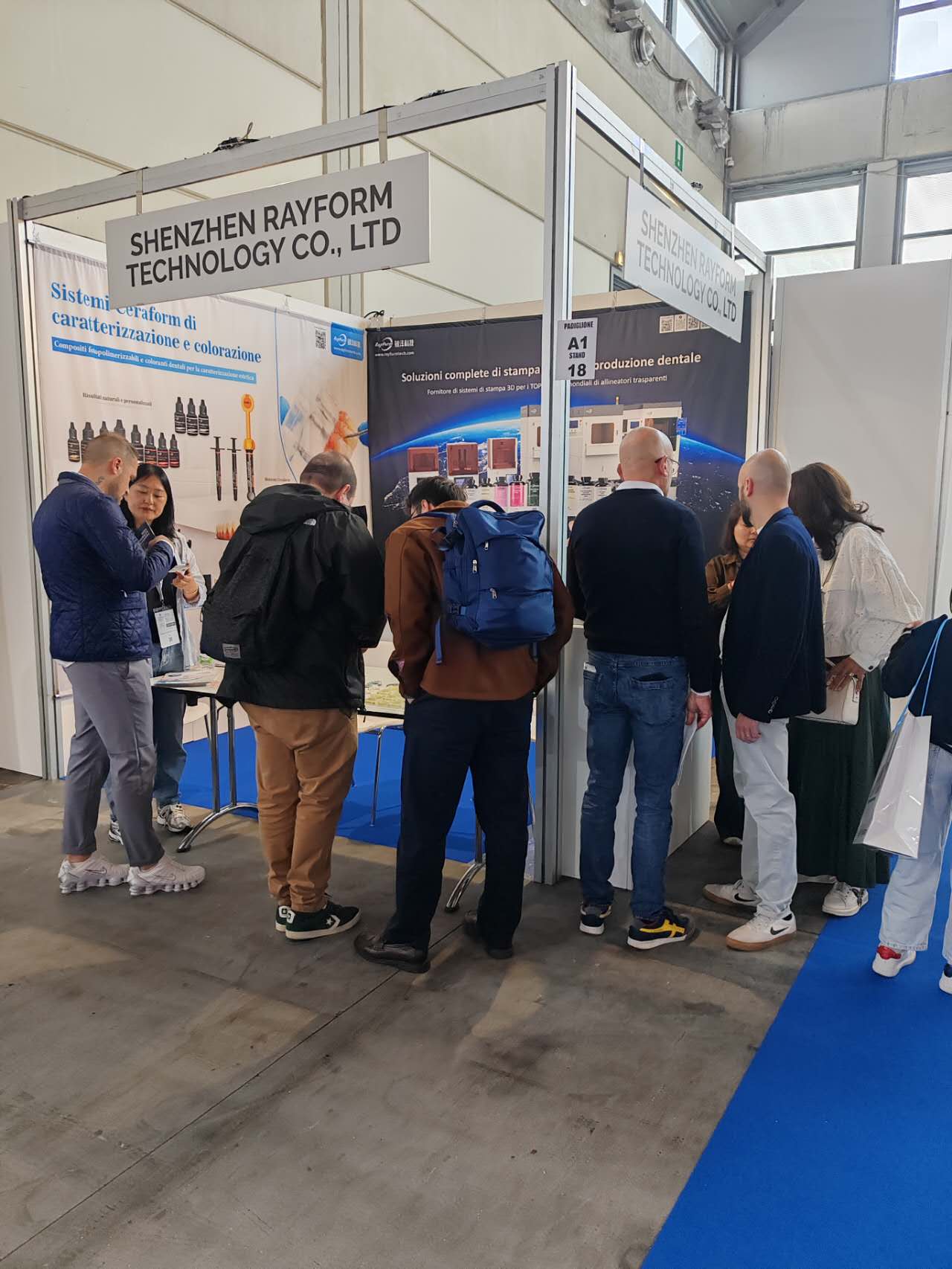
Permanent Crowns Resin — A Ceramic-Loaded Restorative for Definitive Work
RayForm’s permanent crowns resin is designed for definitive single-unit restorations, with ceramic loading engineered to support the mechanical and esthetic demands of final placement rather than provisional use. Italian and EU labs are particularly attuned to ceramic content and color stability — both featured prominently in conversations at the stand. For more detail and a parameter starting point, see the permanent crowns resin overview.
4D Clear Aligner Resin — Direct-Print Aligners for the Next Step in Orthodontics
Direct-print clear aligners and retainers are one of the most-watched categories at Expo3D, and our 4D Clear Aligner Resin is positioned for direct fabrication of aligner shells with the dimensional control and elasticity profile required to actually move teeth. Compared with the conventional thermoforming path, direct-print can reduce manual steps, model inventory, and material waste. For the workflow and the resin in detail, see the clear aligner resin and sheet page.
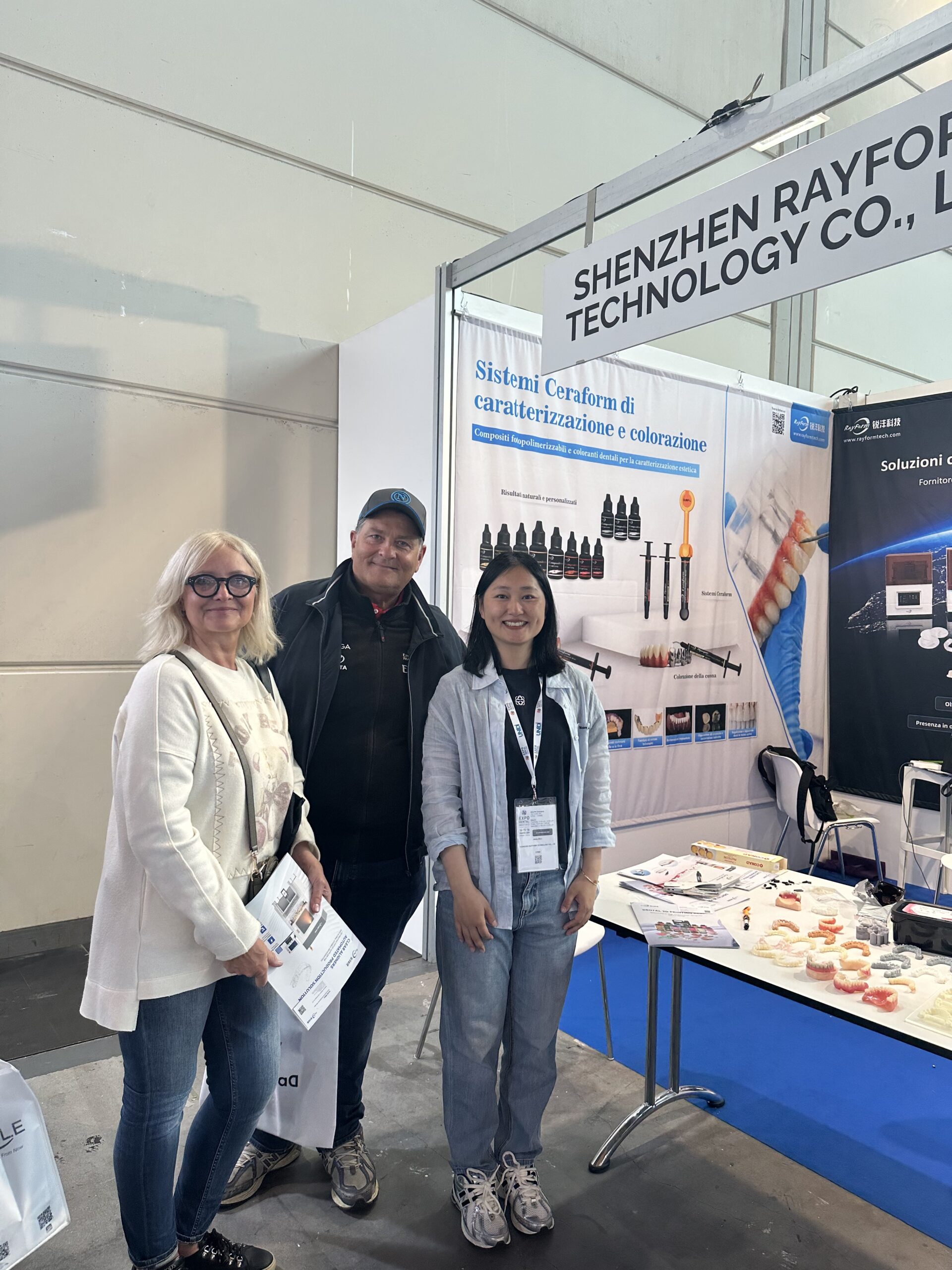
Fixed Hybrid Dentures Resin — Built for Implant-Supported Full-Arch Cases
Fixed hybrid implant-supported prosthetics (“All-on-X” style cases) are an increasingly digital category in European labs, and the Fixed Hybrid Dentures Resin is designed for the structural loading and dimensional stability such cases demand. Many of the conversations at Stand 18 centered on workflow integration — how the resin fits between titanium bars, multi-unit abutment libraries, and final esthetic layering.
Three Conversations We Had Over and Over at Stand 18
If Casablanca asked “how do we get started?”, Rimini asked “how do we scale and differentiate?” These three questions repeated across days.
“How does your flexible denture resin compare to incumbent European brands?”
The flexible / invisible denture base category is one where European labs already work with established brands, so the bar to switch is high. We did not pitch the answer as “ours is better” — we walked visitors through bond strength to PMMA teeth, polish technique, color stability under common oral environment factors, and how we recommend handling rework. The full technical details, including bonding protocol and common failure modes, are in our internal Flexible Denture Q&A reference.
“What is your workflow for printing vs. milling crowns?”
This was the most technically substantive recurring conversation at Stand 18. Print versus mill is no longer a binary debate — it is a case-mix decision. We walked through where ceramic-loaded print resin works (high case volume, complex anatomy, fast turnaround, single-unit definitive) and where milling still wins (translucent multi-layer disks, certain monolithic posterior crowns). Per SOP guidance, we keep regulatory and clinical-outcome claims conservative.
“Do you have a European distributor — and what does logistics look like?”
Many EU lab decision-makers prefer a European-side relationship for inventory turnover, language support, and customs predictability. We discussed our current partner footprint and the conditions under which a new distributor relationship makes sense. Distributor and OEM enquiries can be opened directly through our contact page.
Three Trends We Spotted on the Rimini Floor (Beyond Our Booth)
Stepping outside our own stand, three themes deserve attention from anyone planning the second half of 2026 in this category. They line up with what serious industry voices have been calling out across European events in 2025–2026[5][6], with a distinctly Italian flavor.
The first is the consolidation of the digital denture workflow. Multiple booths in Expo3D and Tecnodental Forum were showing not just individual machines but full pipelines — scan, design, base print, teeth print or library teeth, finish — designed to compress what used to be a multi-step, multi-day process into a single working day. The implication for resin suppliers: it is no longer enough to sell a denture base material; you have to support the full base-plus-teeth conversation.
The second is AI moving from feature checkbox to actual time-saver. AI-assisted design steps for crown margination, aligner staging, and partial framework layout are now embedded inside mainstream CAD tools at Expo3D — and importantly, the technicians demoing them were not founders but lab employees, a sign that the workflow has entered everyday production rather than experimental use.
The third is the rise of direct-print orthodontics as a category-level story. Direct-print clear aligners and retainers are no longer talked about in single-booth showcases; they are talked about across multiple resin manufacturers, multiple printer OEMs, and at least one major orthodontic appliance maker — a sign that the category is maturing.
Actionable Takeaways for European Dental Labs and Aligner Producers
For labs and producers reading this who didn’t make Rimini — or who walked through quickly — here is a fair distillation of what we would tell you at the booth.
- Treat resin chemistry as a sourcing decision, not a stationery purchase. Mechanical properties, ceramic loading, biocompatibility class, and color stability decide whether a case stays in the lab or comes back. Buy on TDS, not on price per kilogram.
- Plan the print vs. mill question case by case. Use a defined matrix: case type, esthetic demand, turnaround, equipment utilization. Avoid blanket policies that lock you into one technology.
- Validate direct-print aligner workflows before you commit volume. Direct-print orthodontics is genuinely industrializing, but the cases where it wins are still narrower than the marketing implies. Pilot first, scale second.
- Document your post-processing SOP at the level of a manufacturing process. Cure time, wash chemistry, drying, inspection — written, dated, version-controlled. This is what separates labs that scale from labs that plateau[8].
- Engage suppliers on training, not just material supply. Suppliers who only sell bottles are commodities. Suppliers who provide parameters, SOPs, and troubleshooting are partners.
Decision Checklist: Choosing a Definitive Resin for Italian and EU Labs
| Step | Question to Ask |
|---|---|
| Define application | Is the resin for definitive, provisional, or model use? |
| Mechanical demand | What loading conditions (single-unit, multi-unit, full-arch hybrid) will the resin face? |
| Esthetic demand | Does the case mix require shade matching, layered translucency, or both? |
| Biocompatibility | RayForm dental resins are CE-marked. Request each resin’s Technical Data Sheet (TDS) for the stated biocompatibility class and intended-use indications, and confirm the CE coverage matches the case type you intend to produce. |
| Printer compatibility | Has the vendor provided verified parameters for your specific printer model? |
| Post-processing | Do you have a wash + cure setup matched to the resin’s stated cycle? |
| Validation | Can the vendor provide a TDS, batch documentation, and a path to traceability? |
| Logistics | Is there inventory in-region, and is technical support available in your working language? |
| Distributor | If sourcing through a distributor, is the support chain clear and stable? |
FAQs — Expodental Meeting 2026 and Direct-Print Dental 3D Printing
Q1: When and where was Expodental Meeting 2026 held?
Expodental Meeting 2026 was held May 14–16, 2026, at the South Pavilions of the Rimini Exhibition Centre in Italy[3].
Q2: How large was the 2026 edition?
The show featured more than 400 exhibitors on a floor exceeding 60,000 square meters, with international exhibitor participation up roughly 22% year on year[1][3].
Q3: What is the Expo3D zone?
Expo3D is the show’s dedicated thematic area for the digital workflow in dentistry — covering 3D printing, CAD/CAM, digital materials, and adjacent technologies[2][3].
Q4: Which RayForm products were featured at Hall A1 Stand 18?
RayForm focused on three resins at Stand 18: Permanent Crowns Resin, 4D Clear Aligner Resin, and Fixed Hybrid Dentures Resin — chosen to match the case mix of European labs interested in definitive printing and direct-print orthodontics[7].
Q5: Can RayForm resins be used on European-installed open-system printers?
Open-system 385 nm and 405 nm LCD and DLP printers are broadly compatible with RayForm’s resin lineup, with verified parameter starting points available on request[7].
Q6: How should a lab decide between print and mill for crowns?
The decision is case-mix driven, not technology-driven: consider case volume, esthetic demand, turnaround pressure, and equipment utilization. Print and mill increasingly coexist in production labs, with each technology winning specific indications.
Q7: Is direct-print clear aligner manufacturing ready for production scale?
Direct-print aligner workflows are industrializing rapidly and were visible across multiple booths at Expo3D, but the cases where direct-print wins outright are still narrower than the marketing suggests. A pilot phase before committing volume is prudent.
Q8: How can a European lab or distributor start a conversation with RayForm?
Sample requests, technical consultations, and distributor / OEM enquiries can be opened through our contact page; a working starting point is to share your printer model and target indication so we can match resin and parameters precisely.
Conclusion — Grazie, Rimini, and What’s Next for RayForm in Europe
If Casablanca told us that North Africa is past “should we go digital?” and into “how do we make digital production stable?”, Rimini told us that Italy and the wider EU are past “is digital production stable?” and into “how do we differentiate definitive output and scale direct-print categories?” That is the conversation RayForm is built for: throughput, yield, repeatability — and a materials roadmap that includes definitive restorative and direct-print orthodontic indications[8].
To everyone who stopped by Hall A1 Stand 18, grazie. To everyone who could not make it but is now considering whether a sample or a workflow consultation makes sense for the next quarter, the easiest next steps are to request a resin sample with validated parameters or to walk a single procedure end-to-end with our team. Start that through our contact page, or browse the full dental resin lineup to match our materials against your indication mix.
References
- Dental Tribune International — Expodental 2026 exceeds exhibitor numbers from previous editions
- Dental News — Expodental Meeting 2026
- Expodental Meeting — Official Event Website
- Dental Tribune — Expodental Meeting 2026 (event reference page)
- Oral Health Group — IDS Cologne 2025: A landmark in global dental innovation (trend context only)
- Institute of Digital Dentistry — IDS 2025 Highlights (trend context only)
- RayForm Technology — Dental 3D Printing Resins (manufacturer product information)
- RayForm Technology — About / Company Approach to Throughput, Yield, and Repeatability