
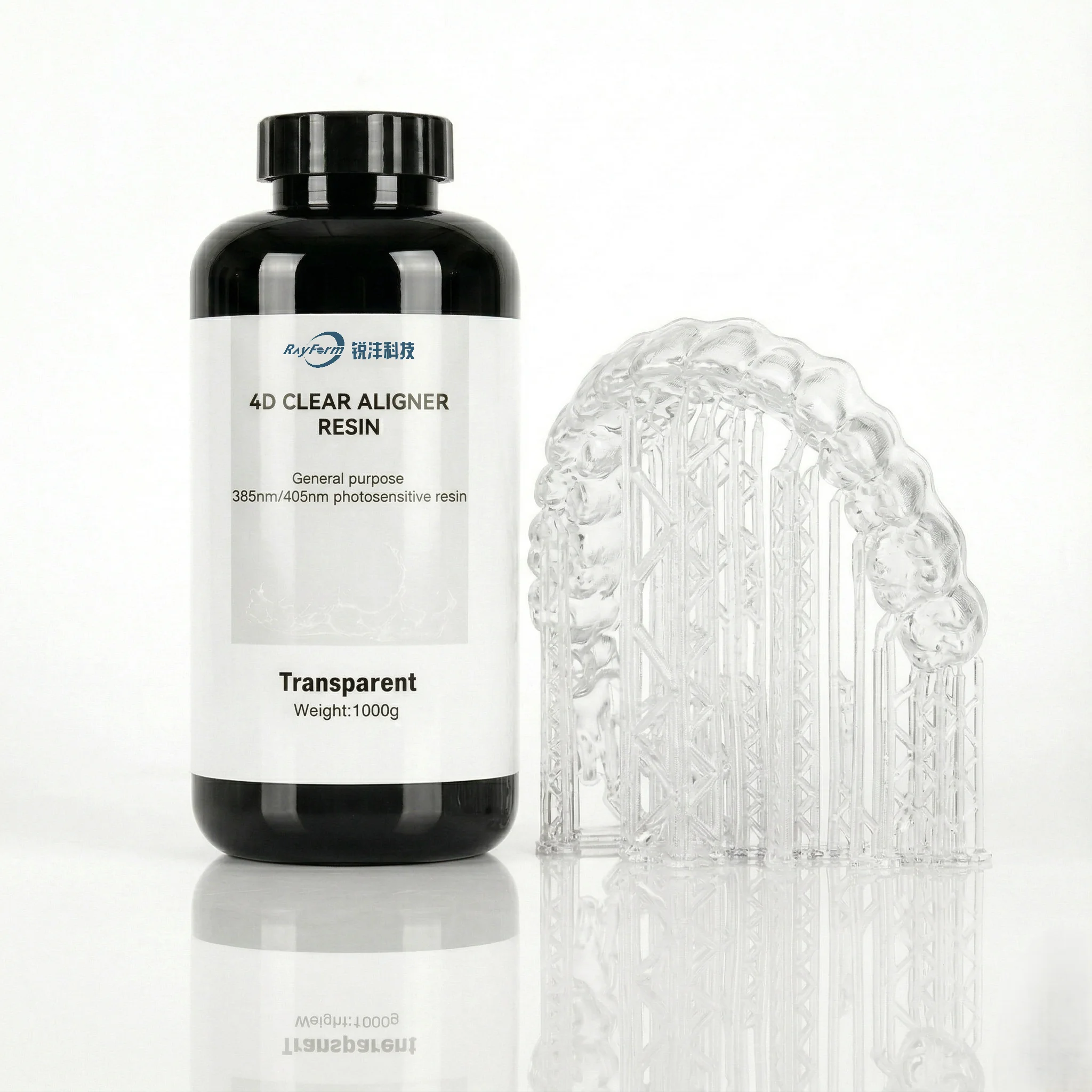
4D Direct Aligner Resin
Key Features
RF-MII-D200 is a clear resin for LCD/DLP printing. Its TDS lists transparency, fatigue resistance, shape memory and toughness as material features. Use the reference properties below to evaluate the material and printing process.
Technical Properties
| Property | Unit | Standard | Typical value |
|---|---|---|---|
| Density | g/cm³ | ASTM D792 | 1.05–1.15 |
| Viscosity | mPa·s | ASTM D445 | 2800–3200 |
| Hardness | Shore D | ASTM D2240 | 80–82 |
| Tensile Strength | MPa | ASTM D638 | 36–38 |
| Elongation at Break | % | ASTM D638 | 70–80 |
| Flexural Strength | MPa | ASTM D790 | 30–40 |
| Flexural Modulus | MPa | ASTM D790 | 1000–1200 |
Representative Printing Parameters
These representative TDS settings are starting points. Validate exposure and motion settings on your own machine, resin batch, environment and workflow.
| Printer | Exposure (s) | Bottom exposure (s) | Bottom layers | Lift distance (mm) | Lift speed (mm/min) | Retract speed (mm/min) |
|---|---|---|---|---|---|---|
| Phrozen Sonic Mini 8K S | 10 | 40 | 3 | 4+4 | 60+120 | 180+60 |
| Elegoo Saturn 4 Ultra | 6 | 30 | 3 | Device default standard parameters | ||
| Elegoo Saturn 3 Ultra | 7.5 | 40 | 3 | 4+4 | 60+180 | 180+90 |
| Creality HALOT-MAGE S | 3.5 | 20 | 3 | 8+2 | 60+180 | 240+120 |
| Anycubic Photon Mono 4 Ultra | 7.5 | 40 | 3 | 4+4 | 90+120 | 240+90 |
| Anycubic Photon Mono M7 Pro | 5.5 | 30 | 3 | 4+4 | 60+120 | 180+60 |
Post-Processing and Storage
- 1
Wash — Clean with isopropyl alcohol in an ultrasonic cleaning machine. Avoid high-frequency shock and forceful brushing that could damage surface detail.
- 2
Dry — Blow the printed part thoroughly dry with a hair dryer or equivalent tool.
- 3
Remove supports — Remove supports before post-curing. Removing them after curing can damage the contact surfaces at the support points.
- 4
Conditional UV post-cure — When a degree of toughness is required, the TDS permits UV curing for 5 minutes. Keep printed parts cool and dry.
Storage
Store below 25°C in a cool place away from direct sunlight. Ordinary visible light can cause polymerization and gelation.
Safety
For eye contact, flush with clean water for at least 20 minutes and seek medical attention. For skin contact, remove contaminated clothing and wash with soap and water. The TDS says the resin is not approved for food, drink or medical application on the human body; consult the SDS for additional information.
LCD/DLP Printer Parameters
The current TDS provides representative LCD/DLP parameters only for the six models shown below; it does not state universal printer or brand compatibility.
Workflow Context Described in the TDS
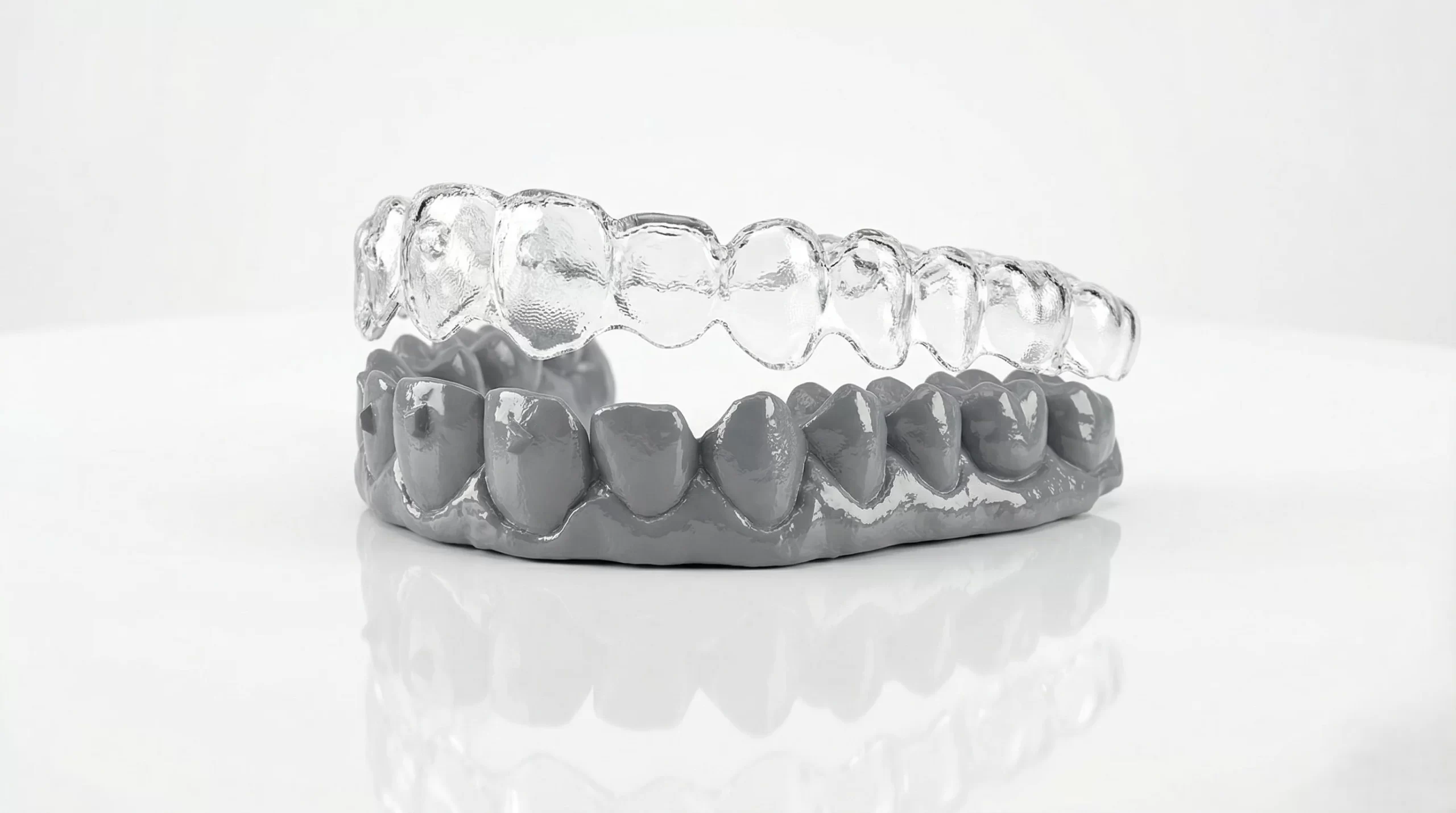
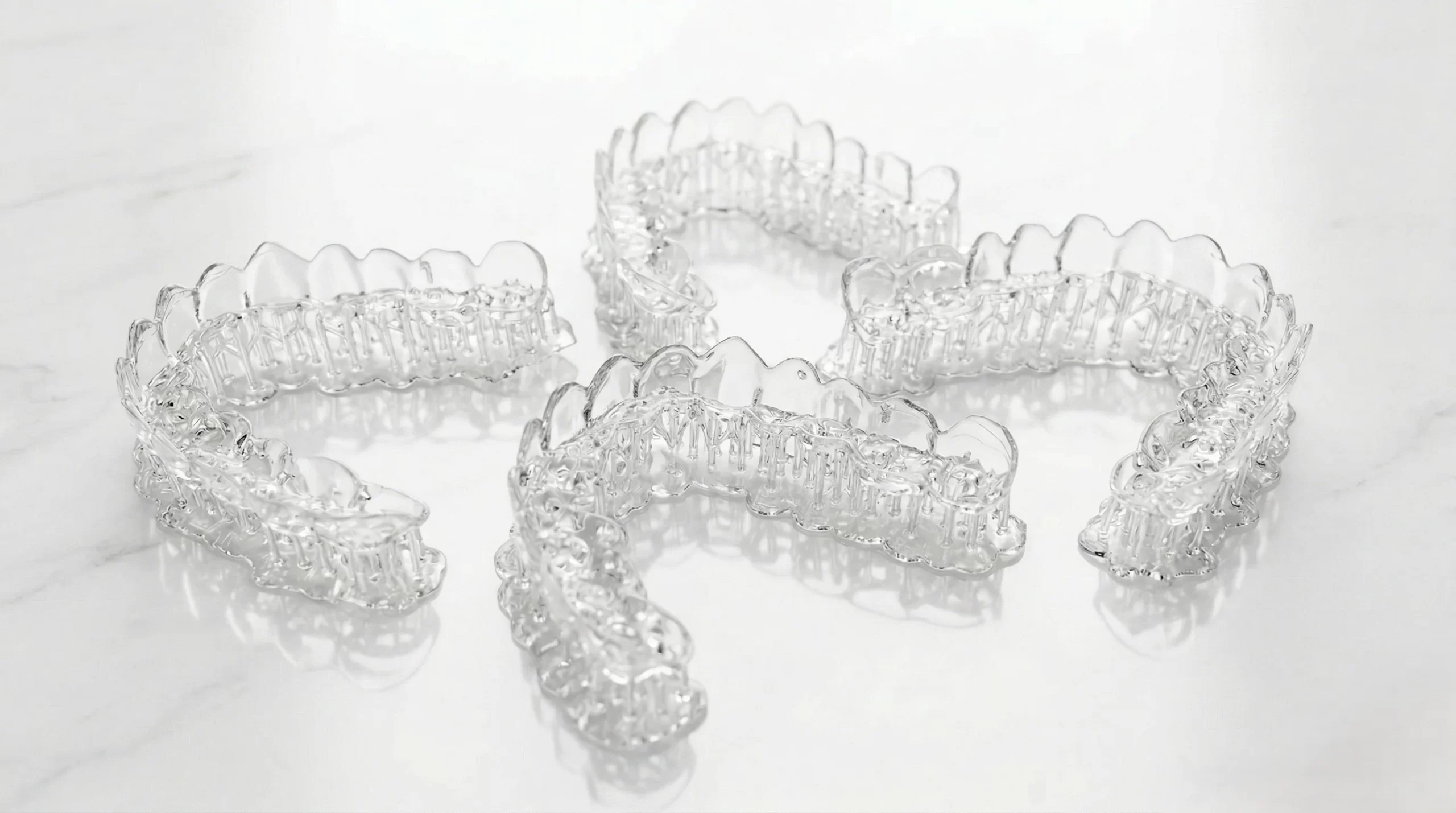
The RF-MII-D200 TDS lists “Direct aligner” under Applications, while its Safety section states that the resin is not approved for medical application on the human body. Confirm the current intended use, product documentation and applicable registration with RayForm before any clinical use.
Frequently Asked Questions
What workflow does the current TDS describe?
The TDS narrative describes a directly printed clear-aligner workflow and its Applications row lists “Direct aligner”, while its Safety section states that the resin is not approved for medical application on the human body.
What technical values does the current TDS report?
Density: 1.05–1.15 g/cm³; Viscosity: 2800–3200 mPa·s; Hardness: 80–82 Shore D; Tensile Strength: 36–38 MPa; Elongation at Break: 70–80 %; Flexural Strength: 30–40 MPa; Flexural Modulus: 1000–1200 MPa.
Which printers are listed in the TDS?
The TDS lists six representative LCD/DLP machines: Phrozen Sonic Mini 8K S, Elegoo Saturn 4 Ultra, Elegoo Saturn 3 Ultra, Creality HALOT-MAGE S, Anycubic Photon Mono 4 Ultra, Anycubic Photon Mono M7 Pro. These settings are starting points, not a universal compatibility claim.
How should printed parts be post-processed?
Use IPA in an ultrasonic cleaner, dry thoroughly, remove supports before curing and use a 5-minute UV cure only when the workflow requires a degree of toughness.
What must be checked before clinical use?
The TDS narrative describes this workflow, but its Applications and Safety statements are not fully consistent. Before any clinical use, verify the product's current intended use, regulatory status and local requirements for the target market.
Which properties should I compare when selecting this resin?
Compare tensile strength, elongation at break, flexural modulus and viscosity together. The RF-MII-D200 TDS lists reference values of 36–38 MPa, 70–80%, 1000–1200 MPa and 2800–3200 mPa·s, respectively. Results depend on equipment, environment, settings, post-processing and test methods; confirm the process for your printer and intended application.
Where can I buy the resin or ask about B2B bulk procurement?
See the product listing for retail options for RF-MII-D200 4D Clear Aligner Resin. Distributors and laboratories planning bulk material procurement can use Request a B2B quote. Include your required quantity, printer, intended application and target market so RayForm can review your requirements.
Need parameters for your production workflow?
Contact RayForm to discuss printer validation, processing conditions and material selection for your laboratory workflow.
Explore More Dental Resins
Compare related resin materials by reference properties, printer requirements and post-processing needs for your dental production workflow.