
Understanding Dental 3D Printing Resins
Selecting the right dental 3D printing resin is one of the most critical decisions facing modern dental laboratories. The resin you choose directly impacts print accuracy, mechanical properties, biocompatibility, and ultimately the clinical success of your dental restorations and appliances. With the rapid expansion of dental 3D printing applications, understanding resin selection criteria has become essential for labs seeking to optimize their workflows and deliver consistent, high-quality results.
Dental 3D printing resins are photopolymer materials specifically formulated for use with DLP, LCD, and SLA printing technologies. Unlike general-purpose 3D printing resins, dental resins must meet stringent biocompatibility requirements and deliver precise mechanical properties tailored to specific clinical applications. The resin formulation determines critical characteristics including viscosity, curing behavior, shrinkage rates, and final material properties after post-processing.
Types of Dental 3D Printing Resins
Model Resins
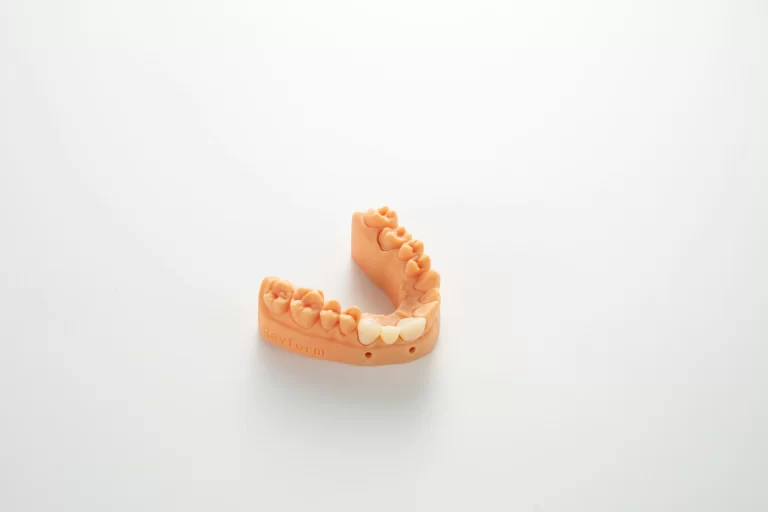
Model resins are designed for producing highly accurate dental models used in diagnostic procedures, treatment planning, and appliance fabrication. These resins prioritize dimensional accuracy and surface finish over mechanical strength, producing models with tolerances of 25-50 microns that faithfully reproduce fine anatomical details. High-resolution model resins enable technicians to verify crown and bridge fit, plan implant placements, and fabricate custom trays with confidence.
Key characteristics of model resins include low shrinkage rates below 1%, excellent detail reproduction, and smooth surface finish that reduces or eliminates the need for post-printing finishing. Most model resins are available in neutral colors that provide good contrast for margin identification and detail inspection.
Biocompatible Resins for Direct Use
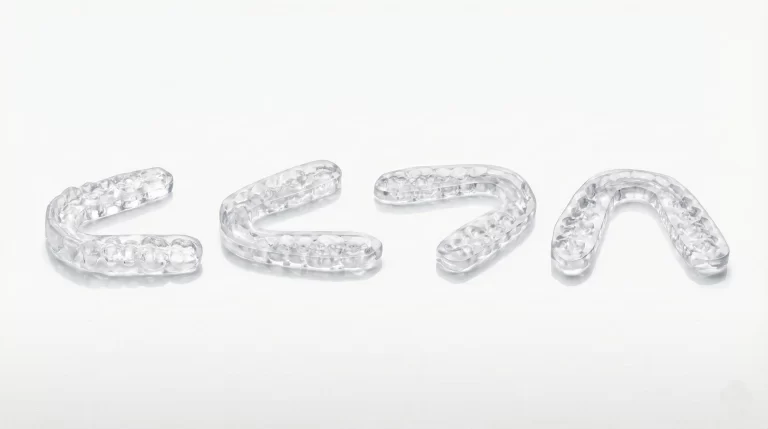
Biocompatible resins are formulated for applications where the printed object will have direct or indirect contact with oral tissues. These materials undergo rigorous testing to meet international biocompatibility standards including ISO 10993 and specific dental material standards. Common applications include surgical guides, temporary crowns and bridges, custom impression trays, and denture bases.
The regulatory landscape for biocompatible dental resins varies by region. In the United States, FDA-cleared resins must demonstrate safety and effectiveness for their intended use. European markets require CE marking under the Medical Device Regulation (MDR). Laboratories must verify that the resins they use carry appropriate regulatory clearance for the specific clinical application.
Investment Casting Resins
Investment casting resins are specifically formulated to burn out cleanly without leaving ash or residue, enabling the production of precision metal dental restorations through the lost-wax casting process. These resins must maintain dimensional accuracy during printing while providing clean, complete burnout during the casting process. The burnout schedule and temperature profile are critical parameters that must be optimized for each resin formulation.
Modern investment casting resins offer minimal thermal expansion during burnout, reducing the risk of cracking the investment mold. Some advanced formulations include indicators that change color during burnout, allowing technicians to visually confirm complete resin elimination before pouring molten metal.
Flexible and Elastic Resins
Flexible resins are essential for producing dental appliances that require elasticity, such as soft denture liners, flexible clasps, and gingival masks. These materials must balance flexibility with durability, maintaining their elastic properties over extended periods in the oral environment. Shore hardness values typically range from 40A to 80A depending on the specific application requirements.
The challenge with flexible dental resins lies in achieving consistent mechanical properties throughout the printed object. Print orientation, layer thickness, and post-curing parameters all influence the final elasticity and durability. Laboratories must develop standardized protocols for each flexible resin to ensure predictable clinical performance.
Critical Selection Criteria
Accuracy and Precision
Accuracy in dental 3D printing encompasses both trueness (how closely the printed object matches the intended dimensions) and precision (the consistency of repeated prints). Resin selection significantly impacts both parameters. Low-shrinkage formulations minimize dimensional changes during polymerization, while consistent curing behavior ensures uniform properties throughout the printed object.
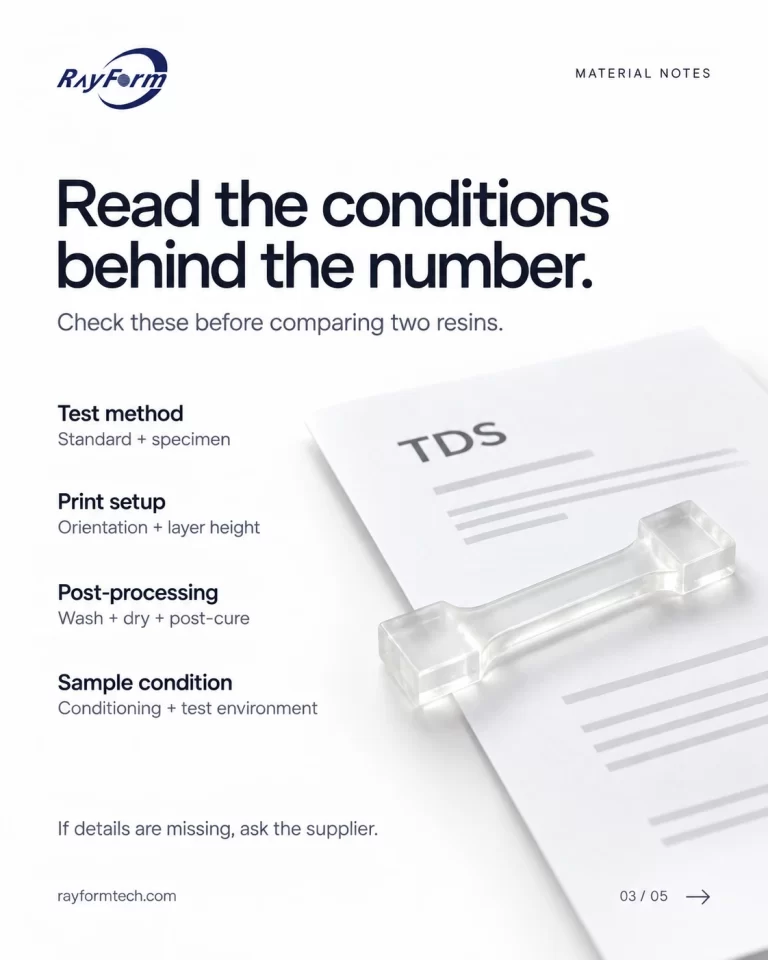
Testing protocols for accuracy evaluation should include measurements of critical dimensions using calibrated instruments. The ISO 12836 standard provides guidelines for evaluating the accuracy of dental CAD/CAM systems, including 3D printing processes. Laboratories should establish their own validation protocols that include printing and measuring standardized test objects before qualifying resins for clinical use.
Mechanical Properties
The mechanical properties of cured dental resins must match the clinical requirements of the intended application. Flexural strength, compressive strength, hardness, and wear resistance are all critical parameters. Temporary crown and bridge resins must withstand occlusal forces for weeks or months, while denture base resins must survive years of functional loading.
Key mechanical property benchmarks include flexural strength values above 80 MPa for temporary restorations, compressive strength above 200 MPa for model materials, and impact resistance sufficient to prevent fracture during handling and clinical use. These values should be verified through standardized testing rather than relying solely on manufacturer specifications.
Workflow Compatibility
Resin selection must consider the complete workflow from design through post-processing and clinical delivery. Print speed, required post-curing time, and cleaning procedures all affect laboratory efficiency. Some resins require extended post-curing to achieve full mechanical properties, while others reach clinical readiness more quickly but may sacrifice certain performance characteristics.
Storage requirements and shelf life are practical considerations that affect laboratory operations. Most dental resins require storage in cool, dark conditions and have shelf lives of 12-24 months when properly stored. Resins that are past their expiration date may exhibit altered viscosity, inconsistent curing, or reduced mechanical properties, potentially compromising clinical outcomes.
Optimizing Your Resin Workflow
Successful implementation of dental 3D printing resins requires attention to several workflow factors. Print parameter optimization, including layer thickness, exposure time, and build orientation, must be calibrated for each resin type and printer model. Most resin manufacturers provide recommended print parameters, but fine-tuning these settings for specific applications can improve results significantly.
Post-processing protocols are equally important. Proper cleaning in isopropyl alcohol or dedicated cleaning solutions removes uncured resin from the printed surface. Post-curing in validated light-curing units ensures complete polymerization and achieves the specified mechanical properties. Skipping or rushing post-processing steps is one of the most common causes of clinical failure in 3D printed dental appliances.
Quality control measures should be integrated into the resin workflow. Regular calibration of printing equipment, verification of curing light intensity, and periodic testing of printed samples ensure consistent results. Documentation of resin lot numbers, print parameters, and post-processing conditions facilitates traceability and troubleshooting.
Cost Considerations
While premium dental resins command higher per-liter prices, the total cost of ownership analysis often favors quality materials. Factors including reduced print failures, fewer remakes, consistent clinical results, and regulatory compliance contribute to lower overall costs. A single failed restoration that requires patient recall and remaking can cost more than the price difference between budget and premium resin for many prints.
Bulk purchasing and inventory management strategies can help control resin costs. However, laboratories should balance cost savings against the risk of resin expiration. Purchasing resin in quantities that can be consumed within the shelf life period prevents waste and ensures that materials are always fresh and performing as specified.
Conclusion
Choosing the right dental 3D printing resin requires careful consideration of clinical requirements, mechanical properties, biocompatibility, workflow compatibility, and cost factors. By systematically evaluating these criteria and establishing standardized protocols for each resin type, dental laboratories can achieve consistent, high-quality results that meet clinical demands and regulatory requirements. As the dental 3D printing industry continues to evolve, staying informed about new resin formulations and application-specific materials will be essential for maintaining competitive advantage and delivering optimal patient outcomes.