
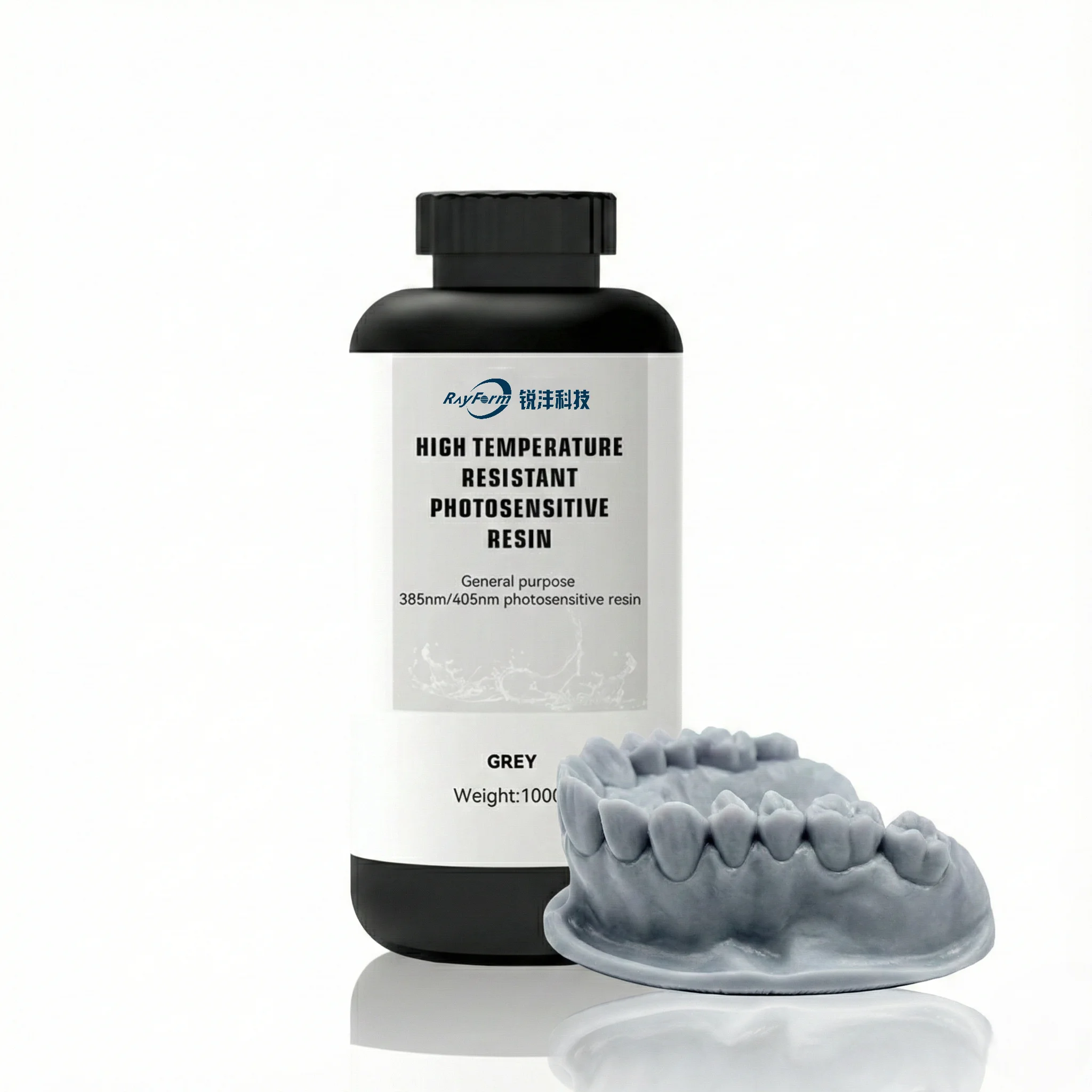
High-Temperature Dental Model Resin
Key Features
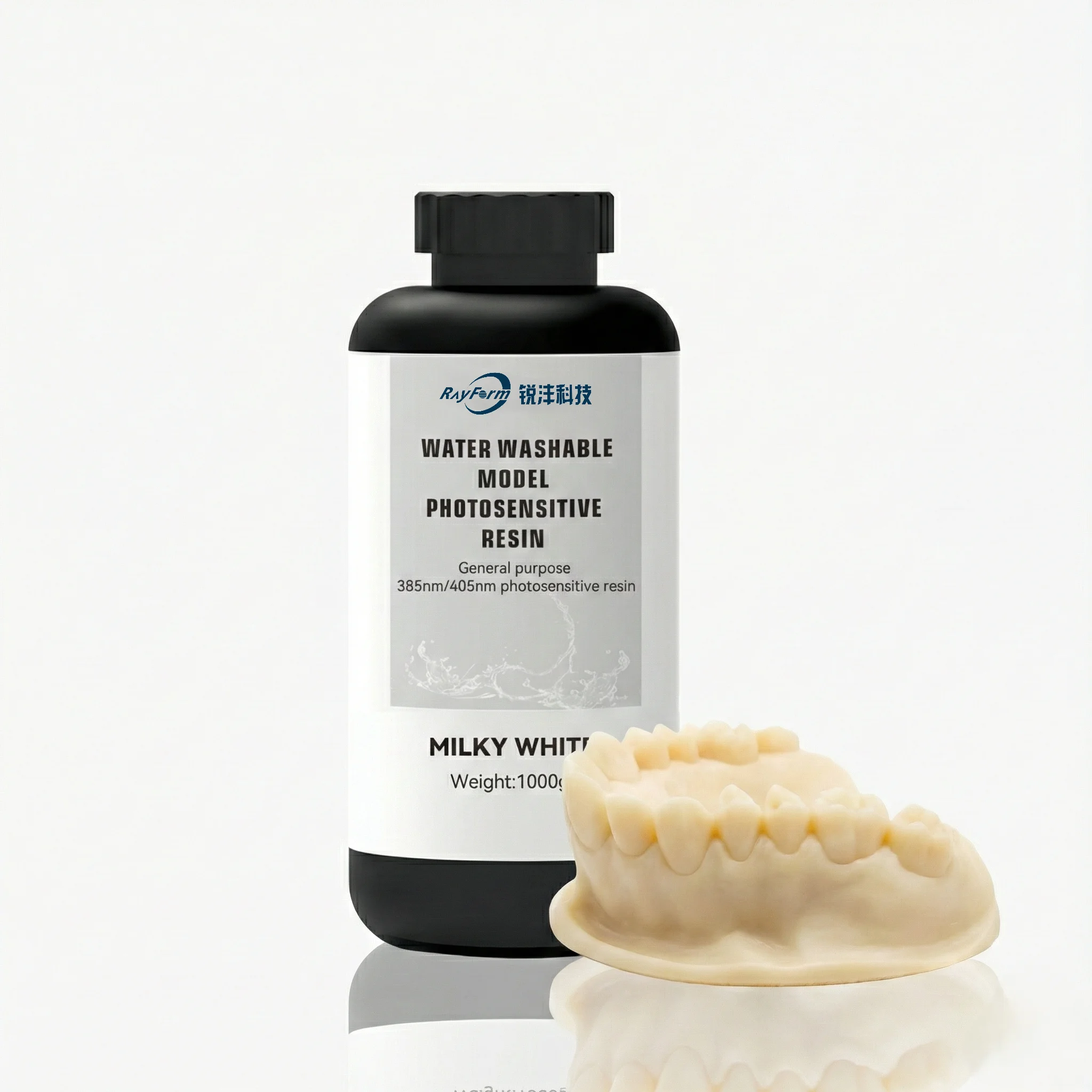
RF-CI-808 is a milky-white resin for 3D printing high-temperature dental models with LCD and DLP systems. The TDS identifies fast forming, high precision, high surface hardness, detail reproduction, and high-temperature resistance as its key characteristics. Its cured material is designed to withstand the heat and pressure applied by hot-pressing molding instruments; production settings and the full molding cycle should be validated for each workflow.
Basic Performance
| Properties | Unit | Standard | Result |
|---|---|---|---|
| Density | g/cm3 | ASTM D792 | 1.05-1.15 |
| Viscosity | mPa·s | ASTM D445 | 1100 |
| Hardness | Shore D | ASTM D2240 | 83-87 |
| Tensile Strength | MPa | ASTM D638 | 61.4 |
| Elongation at Break | % | ASTM D638 | 17.2 |
| Flexural Strength | MPa | ASTM D790 | 69.6 |
| Flexural Modulus | MPa | ASTM D790 | 1713 |
| HDT @ 0.45 MPa | °C | ASTM D648 | 68 |
Printing Parameters
Representative machine parameters are listed below. Contact us for additional validated printer profiles.
| Printer | Exposure (s) | Base Exp. (s) | Base Layers | Lift Height (mm) | Lift Speed (mm/min) | Retract Speed (mm/min) |
|---|---|---|---|---|---|---|
| Phrozen Sonic Mini 8K S | 2.5 | 10 | 3 | 8 | 120 | 120 |
| Anycubic Photon Mono 2 | 2 | 15 | 3 | 8 | 120 | 120 |
| Anycubic Photon Mono | 2 | 12 | 3 | 8 | 120 | 120 |
| Elegoo Saturn 4 Ultra | 3 | 25 | 3 | Device default parameter | ||
Post-Processing & Storage
-
1
Wash – Rinse residual resin from the surface with water first, then clean with water or IPA in an ultrasonic cleaner. Avoid high-frequency shock or forceful brushing to protect fine surface details.
-
2
Dry – Thoroughly blow the model dry with an air gun, hair dryer, or similar tool.
-
3
Remove Supports – Remove supports before post-curing. Removing them after curing can easily damage the support contact area.
-
4
Post-Cure – For applications requiring certain toughness, UV cure for about 5 minutes. Store printed parts in a cool, dry place after curing.
Storage
Store below 25°C in a cool place away from direct sunlight. Keep away from visible light to prevent resin polymerization and gelation.
Safety
Eyes: Flush with clean water for at least 20 minutes and seek medical attention immediately. Skin: Remove contaminated clothing and wash thoroughly with soap and water. Not approved for food, drink, or direct medical use on the human body. See MSDS for details.
Machine Compatibility
RF-CI-808 is processed with LCD and DLP systems. The current TDS lists reference starting parameters for these representative machines; validate the settings before production.
For another LCD or DLP printer, request a starting profile and validate the complete workflow before production.
Dental Model Applications
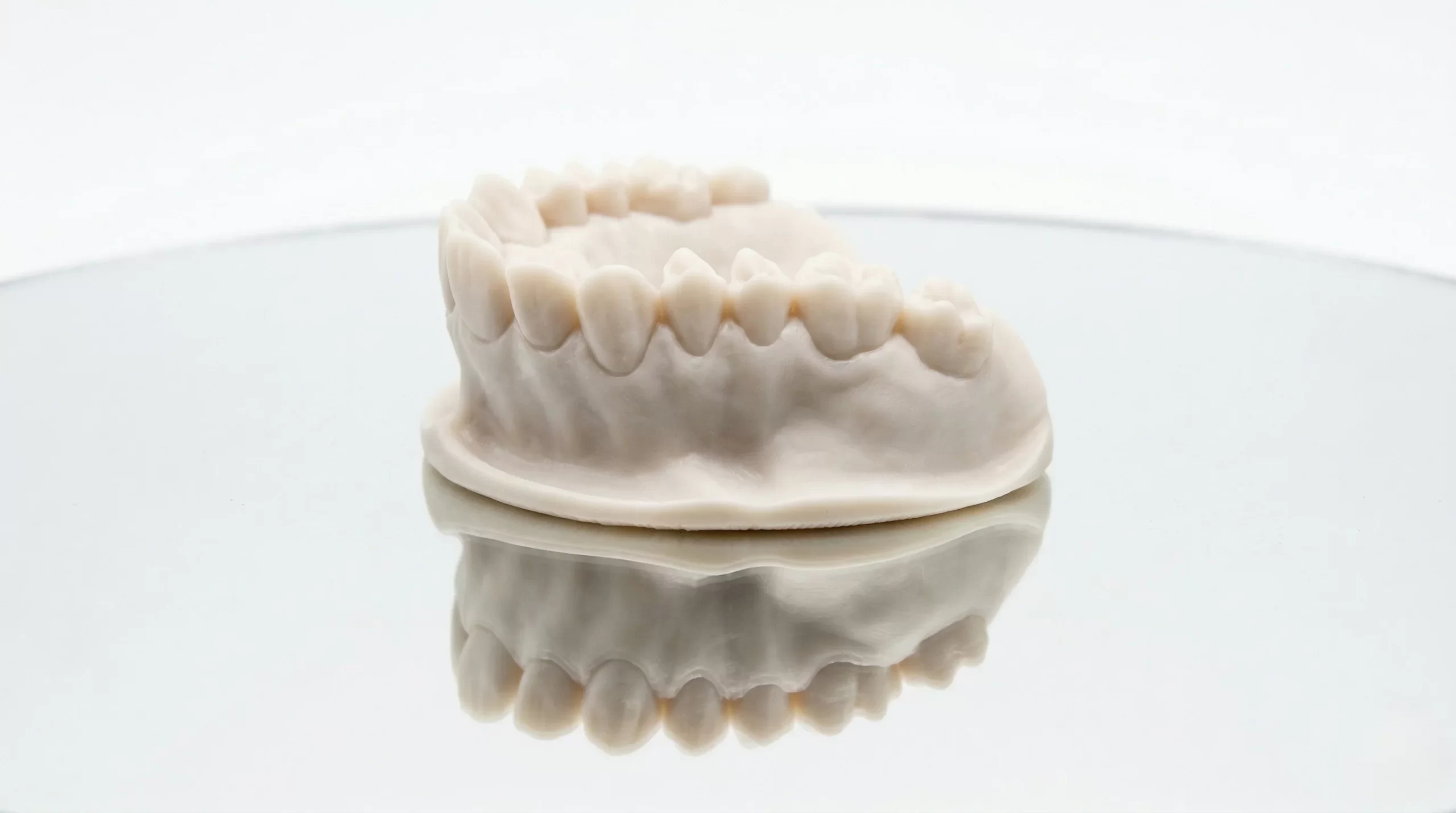
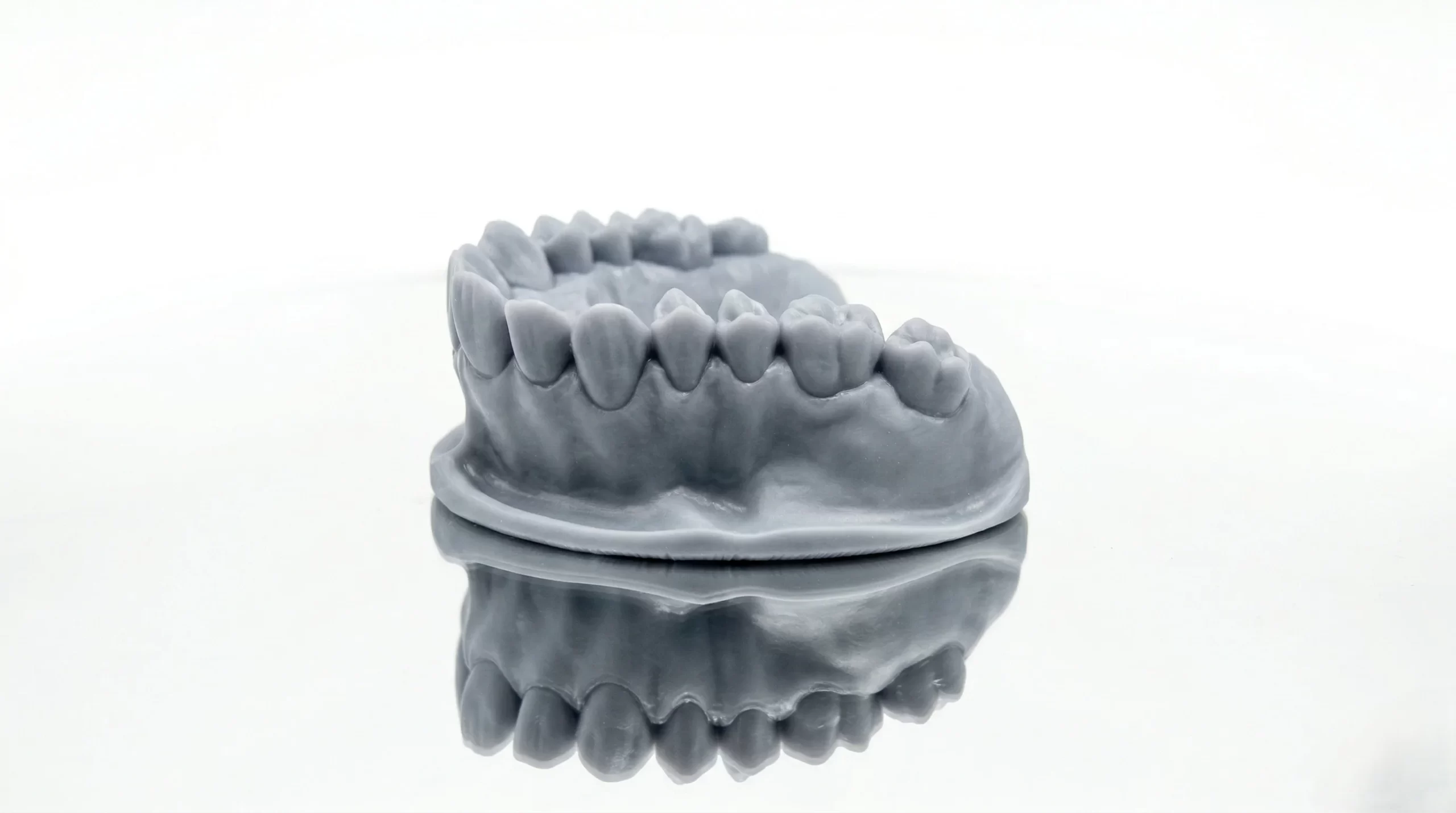
Developed for high-temperature dental models used with hot-pressing molding instruments in laboratory production workflows.
Supply & Technical Support
Contact RayForm for current pack options, sample availability, quotations, technical documents, and printer starting profiles for RF-CI-808.
Current Supply Options
Pack sizes and order formats may vary by market. Request the current quotation and availability for your project.
OEM / ODM Services
Discuss project-specific formulation, private-label, or white-label requirements with RayForm for technical and commercial review.
Samples & Parameter Support
Request samples, technical documentation, and printer-specific starting parameters for workflow validation.
Workflow Review
Share your printer and hot-pressing process so the starting parameters can be assessed before sampling.
Frequently Asked Questions
For your material trial, review dental model shrinkage after curing and our high-temperature model resin guide for aligner thermoforming. Use the current RF-CI-808 TDS and validate the complete printing and forming process.
- 1
What is RF-CI-808 used for?
It is a milky-white LCD/DLP resin for printing high-temperature dental models used in laboratory hot-pressing workflows. - 2
What heat-resistance value is listed in the TDS?
The TDS reports an HDT of 68°C at 0.45 MPa under ASTM D648. This test value is not a universal maximum operating temperature; validate the complete heat-and-pressure cycle. - 3
Which printing systems are listed?
The processing methods are LCD and DLP. The TDS provides reference parameters for four representative printer models shown above. - 4
How should a printed model be cleaned?
Rinse the surface, then use water or IPA in an ultrasonic cleaner. Avoid high-frequency shock or forceful scrubbing, dry thoroughly, and remove supports before post-curing. - 5
Is RF-CI-808 approved for direct use on the human body?
No. The TDS states that this resin is not approved for food, drink, or medical application on the human body. - QWhat should a laboratory test when selecting RF-CI-808 for thermoforming models?
Evaluate the printed model through the complete heat-and-pressure cycle used by your forming equipment. The TDS identifies high-temperature resistance and surface hardness for hot-pressing model workflows. Record whether the model retains the required shape and details under your actual cycle, using a consistent printing and post-processing sequence. Use the documented heat-deflection value as a material reference when planning the trial. - QHow do retail and B2B resin purchasing differ?
For retail resin purchases, open the matching store product. For bulk supply or distributor pricing, send a B2B resin inquiry. Include the resin, required quantity, printer model and target market so the order and current material documentation can be matched to your workflow.
Evaluate RF-CI-808 for your thermoforming model workflow
Tell RayForm your printer, material application and expected volume. Request a sample, TDS, starting parameters and a current supply quotation.
Explore More Materials
Compare RayForm resins by printed component, cleaning process and material data to select a laboratory production workflow.