
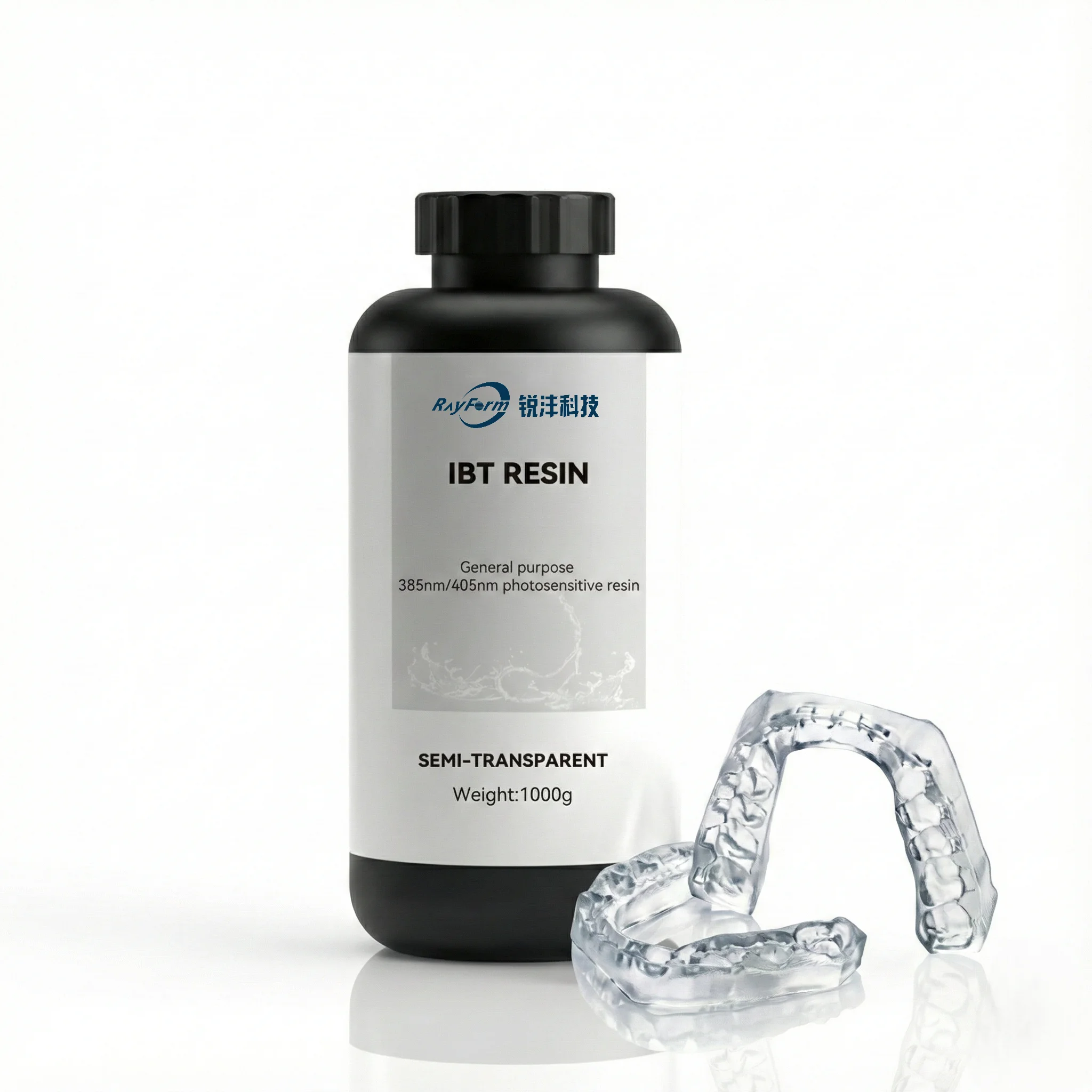
Indirect Bonding Tray (IBT) Resin
IBT resin described by the TDS
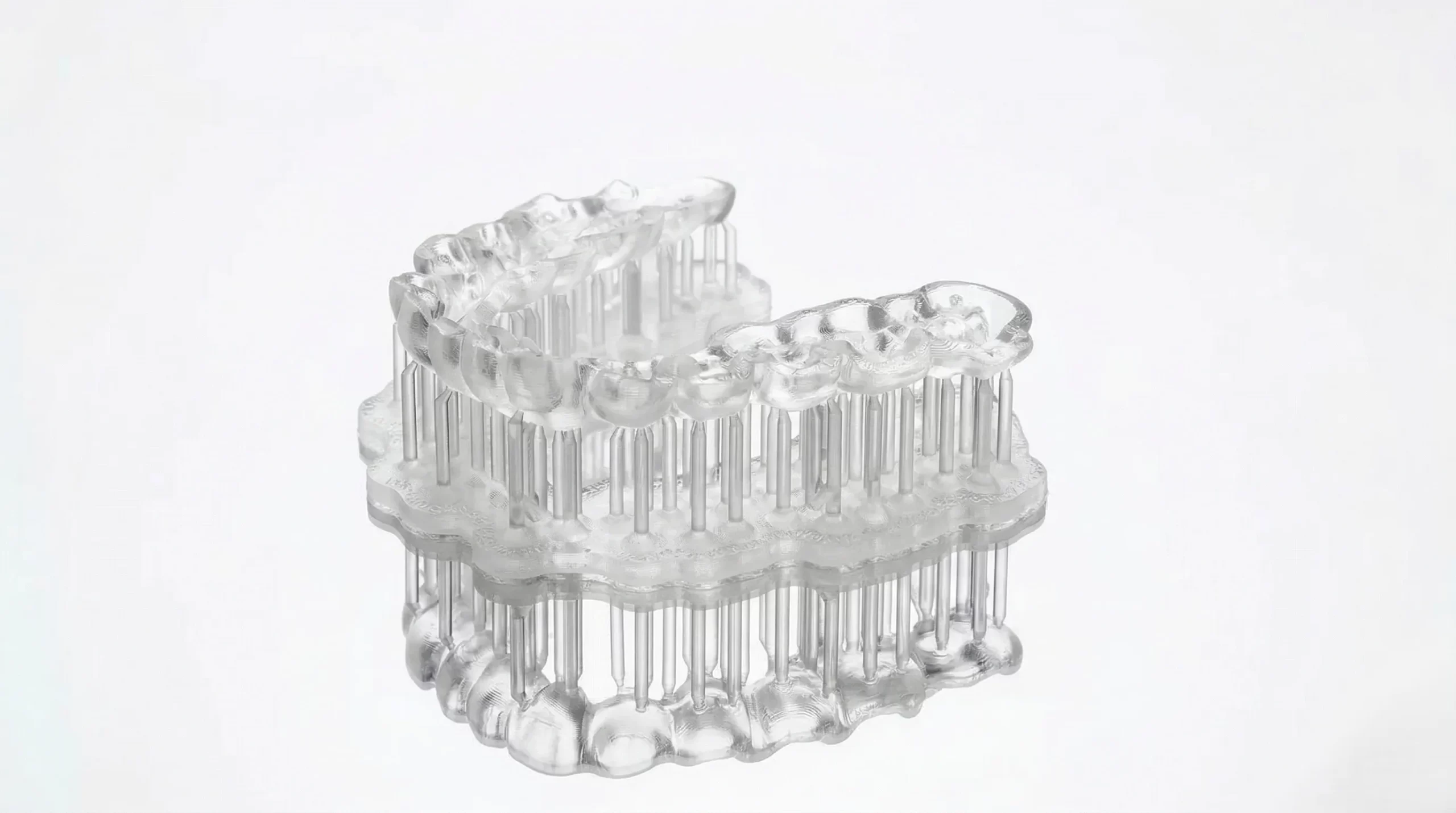
The RF-IR-14 TDS describes a semi-transparent light-curing resin for indirect bonding tray workflows, with flexibility, easy removal, and a non-stick surface. Use the material data and printer profiles as starting points for laboratory validation.
Basic Performance
| Properties | Unit | Test method | Result |
|---|---|---|---|
| Density | g/cm³ | ASTM D792 | 1.04–1.10 |
| Viscosity | mPa·s | ASTM D445 | 1000 |
| Hardness | Shore D | ASTM D2240 | 30D |
| Tensile Strength | MPa | ASTM D638 | 12 |
| Elongation at Break | % | ASTM D638 | 140 |
| Tensile Modulus | MPa | ASTM D638 | 35 |
| Solubility | μg/mm³ | ISO 20795-2 | 3.5 |
Printing Parameters
Initial LCD/DLP parameters from the current TDS; calibrate for your printer, lot, temperature, geometry, supports, and post-processing.
| Printer | Exposure (s) | Base Exp. (s) | Base Layers | Lift Height (mm) | Lift Speed (mm/min) | Retract Speed (mm/min) |
|---|---|---|---|---|---|---|
| Phrozen Sonic Mini 8K S | 6 | 20 | 3 | 4+4 | 60+120 | 180+60 |
| Elegoo Saturn 4 Ultra | 3.5 | 20 | 3 | Default standard parameters of the device | ||
| Elegoo Saturn 3 Ultra | 4.5 | 25 | 3 | 4+4 | 60+180 | 180+90 |
| Creality HALOT-MAGE S | 2 | 10 | 3 | 8+2 | 60+180 | 240+120 |
| Anycubic Photon Mono 4 Ultra | 4.5 | 25 | 3 | 4+4 | 90+120 | 240+90 |
| Anycubic Photon Mono M7 Pro | 3.5 | 20 | 3 | 4+4 | 60+120 | 180+60 |
Post-Processing & Storage
-
1
Wash – Clean the printed model with isopropyl alcohol using an ultrasonic cleaner. Avoid high-frequency shock or forceful brushing to prevent damage to surface details.
-
2
Dry – Thoroughly blow-dry the model with a hair dryer or similar device after washing. Ensure no alcohol residue remains before proceeding.
-
3
Remove Supports – Remove supports before post-curing. Removing supports after post-cure can cause damage to the contact surface at support attachment points.
-
4
Post-Cure (UV Lamp, 5 min) – For applications requiring certain toughness, cure under a UV lamp for 5 minutes. Store finished parts in a cool, dry place.
Storage
Store below 25°C in a cool, dry place away from direct sunlight. Ordinary visible light may cause the resin to polymerize and gel.
Safety
Eyes: Flush with plenty of clean water for at least 20 minutes; seek medical attention immediately. Skin: Remove contaminated clothing and rinse thoroughly with soap and water. Not approved for food, drink, or medical application on the human body. See MSDS for details.
Printers listed in the TDS
Technology: LCD/DLP. These are the only representative models named in the current TDS.
Use these profiles as calibration starting points, not as universal approval.
Indirect bonding tray workflow described by the TDS
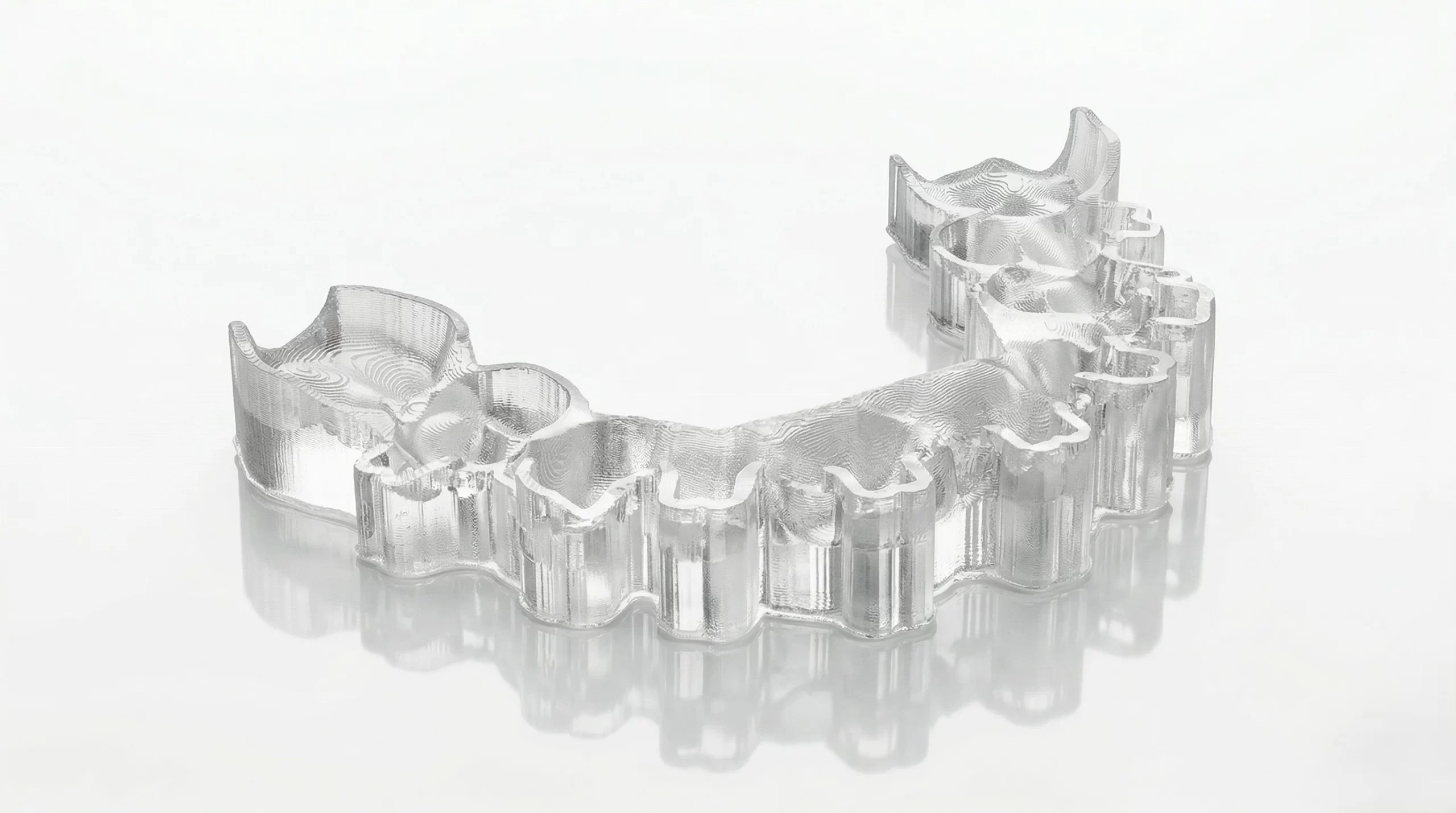
The TDS describes RF-IR-14 for indirect bonding tray workflows in digital orthodontics. Because the same document states that the resin is not approved for medical application on the human body, verify the current intended use, regulatory status, and laboratory protocol before any clinical use.
Technical questions about RF-IR-14
- QWhat workflow does the TDS describe?
An indirect bonding tray workflow. This description is not a regulatory approval. - QWhat are the main material values?
Shore D 30, tensile strength 12 MPa, elongation 140%, tensile modulus 35 MPa, and solubility 3.5 µg/mm³. - QWhich printing technologies are listed?
LCD and DLP, with initial profiles for six representative printers. - QHow should the printed part be cleaned?
Use isopropyl alcohol in an ultrasonic cleaner, dry fully, and remove supports before post-curing. - QDoes the page claim approved clinical use?
No. Verify intended use, regulatory status, and the local protocol before clinical use. - QWhy should a lab evaluate IBT resin separately from model resin?
The RF-IR-14 TDS describes a flexible, easy-removal, non-stick material for indirect bonding trays. A tray and a rigid dental model require different material behavior. Evaluate tray release, shape retention and the matching printer profile on laboratory trial parts. - QHow do retail and B2B resin purchasing differ?
For retail resin purchases, open the matching store product. For bulk supply or distributor pricing, send a B2B resin inquiry. Include the resin, required quantity, printer model and target market so the order and current material documentation can be matched to your workflow.
Evaluate this resin for your workflow
Share your printer model and material requirements to request TDS starting profiles, samples or a B2B resin quote.
Explore More Materials
Compare dental 3D printing resins by material data, laboratory workflow and printer-specific calibration.